‘It’s an insult’: Call to remove effigies of Indigenous faces on Jacques Cartier fountain in Saint-Henri
Posted July 30, 2026 1:14 pm.
Last Updated July 30, 2026 4:10 pm.
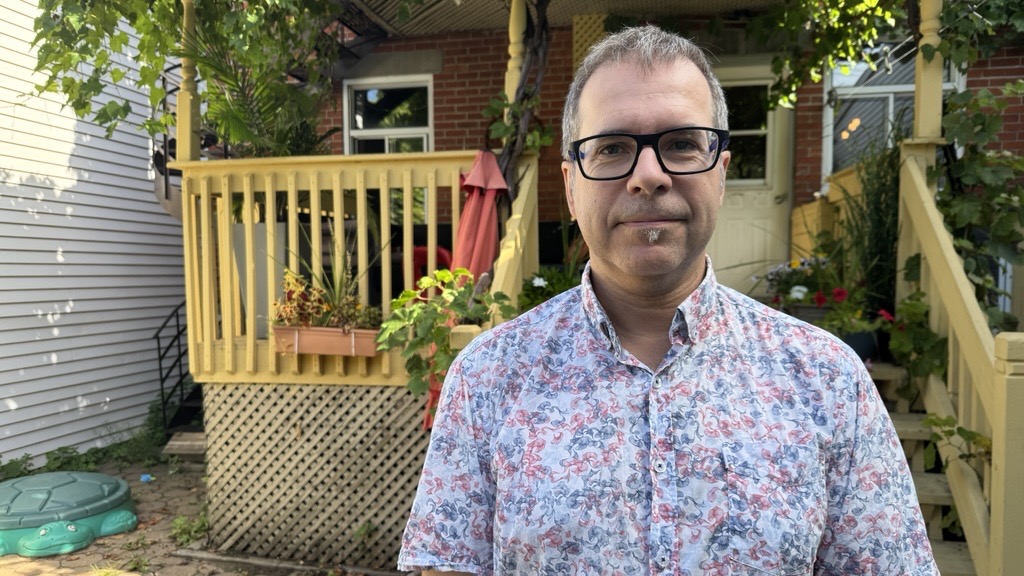
An Innu surgeon in Montreal is urging city officials to make changes to the Jacques Cartier monument-fountain in the Sud-Ouest borough, calling it insulting to Indigenous people.
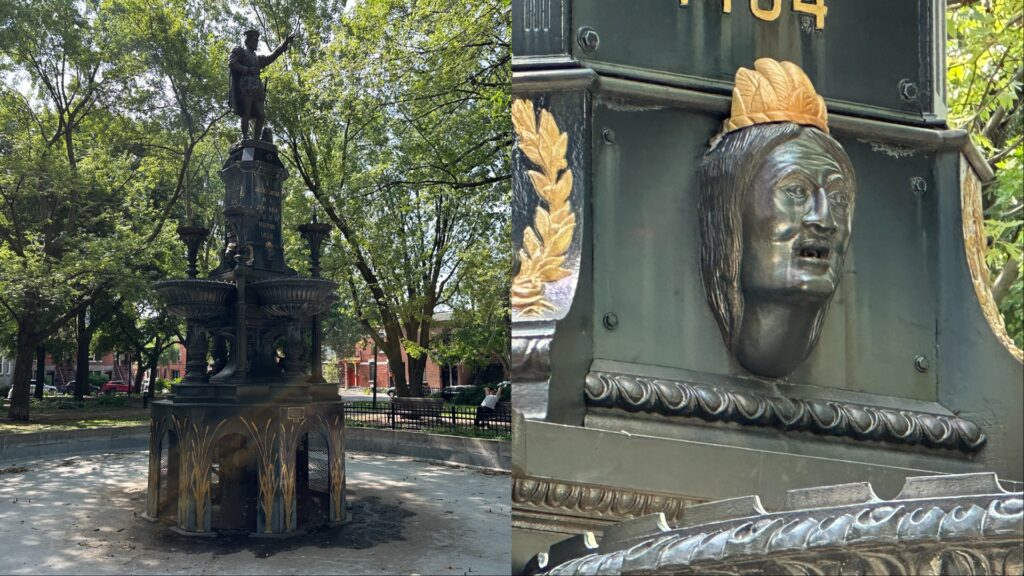
Dr. Stanley Vollant wants to see two elements changed from the fountain in the Saint-Henri park: its effigies and its plaque.
Vollant first noticed the effigies of Indigenous faces during the summer of 2020 when his daughter, who was five years old at the time, brought them to his attention.
“My daughter told me, ‘hey daddy, what are those monsters that are spitting out water?’ recounted Vollant, who lives across from the monument-fountain. “And I took a look and it was Indigenous faces, very hideous Indigenous faces spitting out water. And I said to my daughter, Beatrice, ‘this is us. This is us, those monsters are us.’ And she said, ‘why they despise us as monsters?’ I said, ‘that’s history, my love, and we have to change that history.’”
Dr. Vollant is not looking for the fountain to be destroyed or removed but simply changed. He wants the Indigenous effigies removed.
“I think as a group we can find something much better and also maybe to remove those gargoyles that are Indigenous people, put something else without destroying this beautiful fountain,” he said.
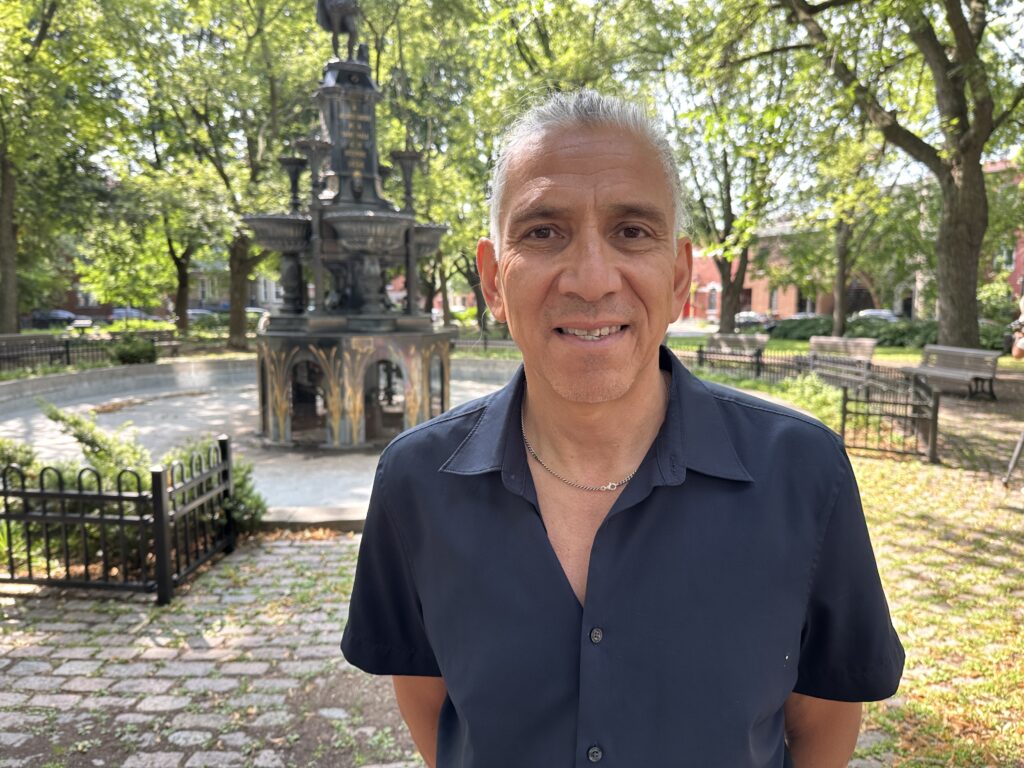
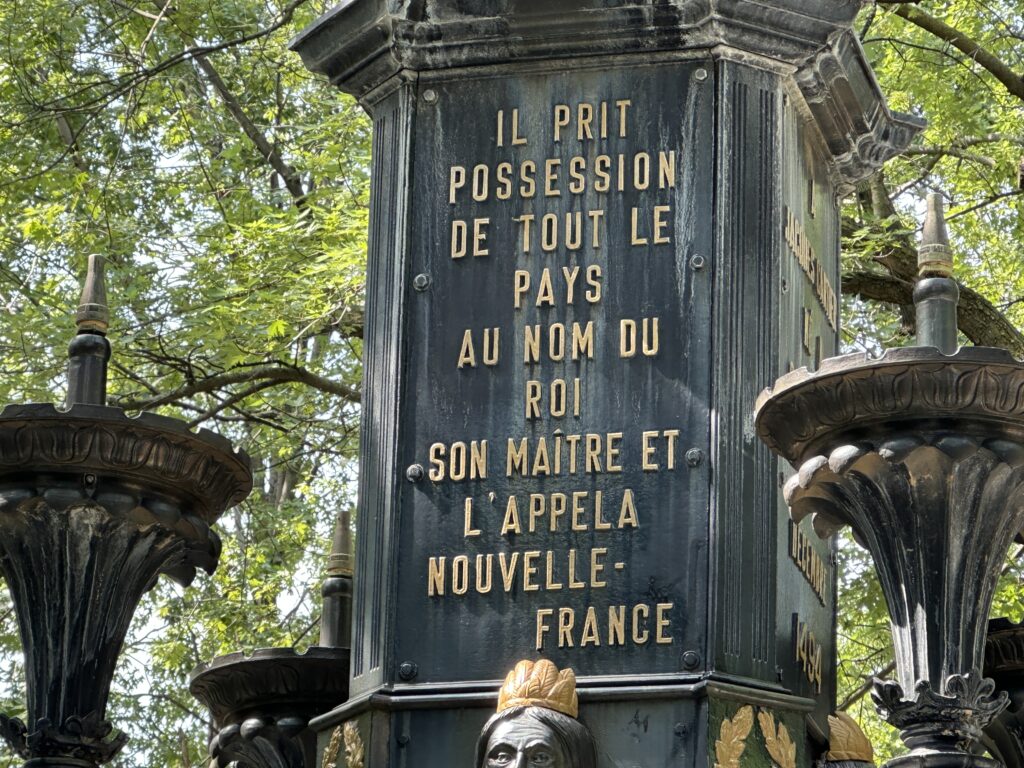
The monument that was completed in 1893 commemorates the life of Jacques Cartier. One of the four plaques on it, referring to his life, reads: “He took possession of the entire country in the name of his master, the king, and called it New France.”
That’s the second element Vollant would like altered.
“That’s an insult for Indigenous people,” he said. “We never gave up our land. We never surrendered. We never had lost a fight for that land. So for us, it’s an insult.”
Heritage Montreal says like other commemorative monuments in Montreal, they came from a time where history was written and read differently from the way things are seen and lived today.
“The fountain in Saint-Henri has been at least twice a source of collective effort and pride,” Dinu Bumbaru, a policy director of Heritage Montreal, told CityNews in an email. “Once when created in the 19th century and once again when Saint-Henri people rallied and fundraised in the 1990s to save the fountain and its statue of Jacques Cartier (see Comité Statue-ta-fête), while battling against centralised City of Montreal management. This is a community dimension (is) not to be forgotten, although I don’t think those citizens fought for such a bygone image of the First Nations people.”
Bumbaru acknowledged Dr. Vollant’s complaints, calling it a “way of wisdom which deserves real consideration.”
“Montreal has done great efforts to put up captions next to its public art pieces,” Bumbaru wrote. “But it’s often done with art history in mind paying little attention to the raison d’être of such commémorative monument / fountain and the evolution of their meaning as a sign of society’s own transformation and sensitivities.
“Again, like we managed to successfully update the city flag and arms in 2017, we should have a way à la Montréalaise to address this, a way of common understanding, not just bureaucratic procedures.”
Vollant feels the City of Montreal should gather a committee to rewrite the plaque.
“Do something that would be respectful of Indigenous people on the plaque that says ‘he took possession of this land.’ But I think there’s ways to say it.”
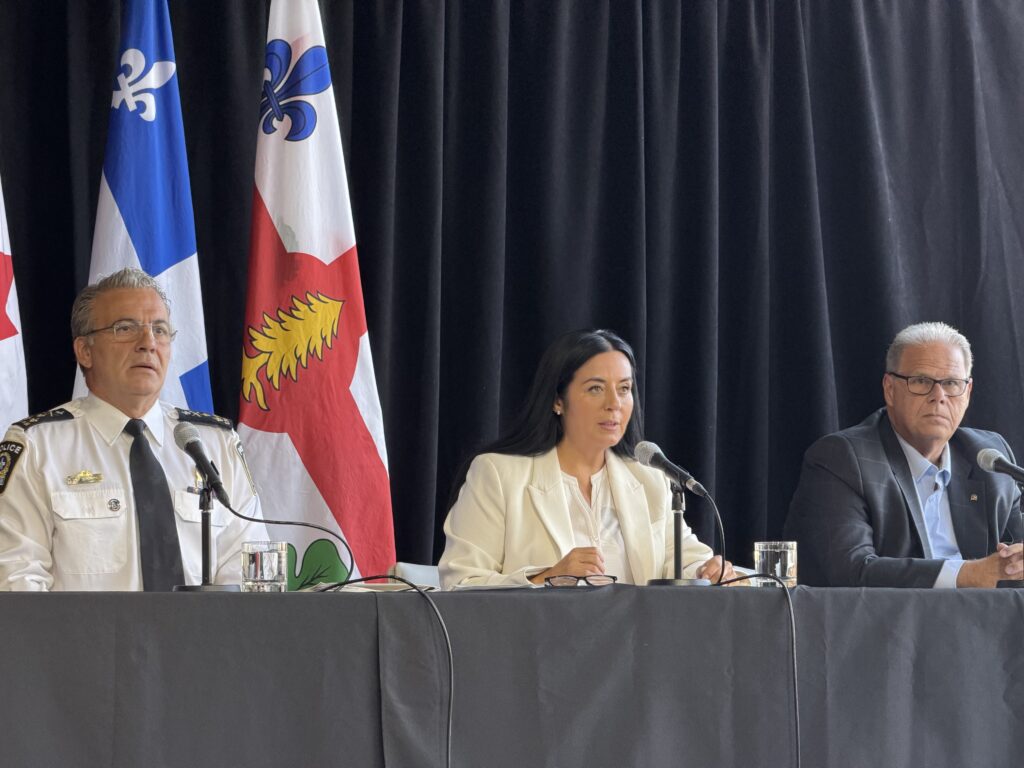
In a written response to CityNews, the office of the Sud-Ouest borough mayor said it has been in touch with Montreal’s Commissioner for Indigenous Relations, Randy Legault Rankin, to “reflect on the matter and what can be done.”
“We are looking for a way to contextualize the statue and to explain its colonial past. We are in the beginning of this process and wish to consult our local organizations and involved citizens like Mr. Vollant,” the borough mayor’s office wrote in an email.
Dr. Vollant is hoping a middle ground can be found.
“We have to maybe change the narrative and to do some change and that will be a compromise with Indigenous people and non-Indigenous people,” he said. “That’s the process of reconciliation. It’s working together.”