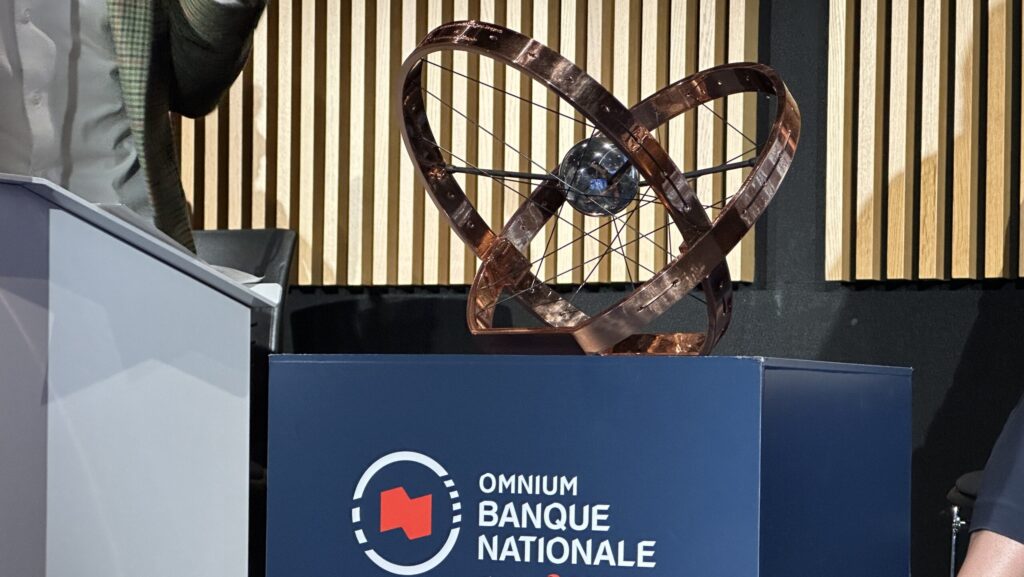
Nova Scotia professor preserves legacy of 1976 Montreal Olympics through vast collection
Posted July 31, 2026 5:00 pm.
Last Updated July 31, 2026 5:08 pm.
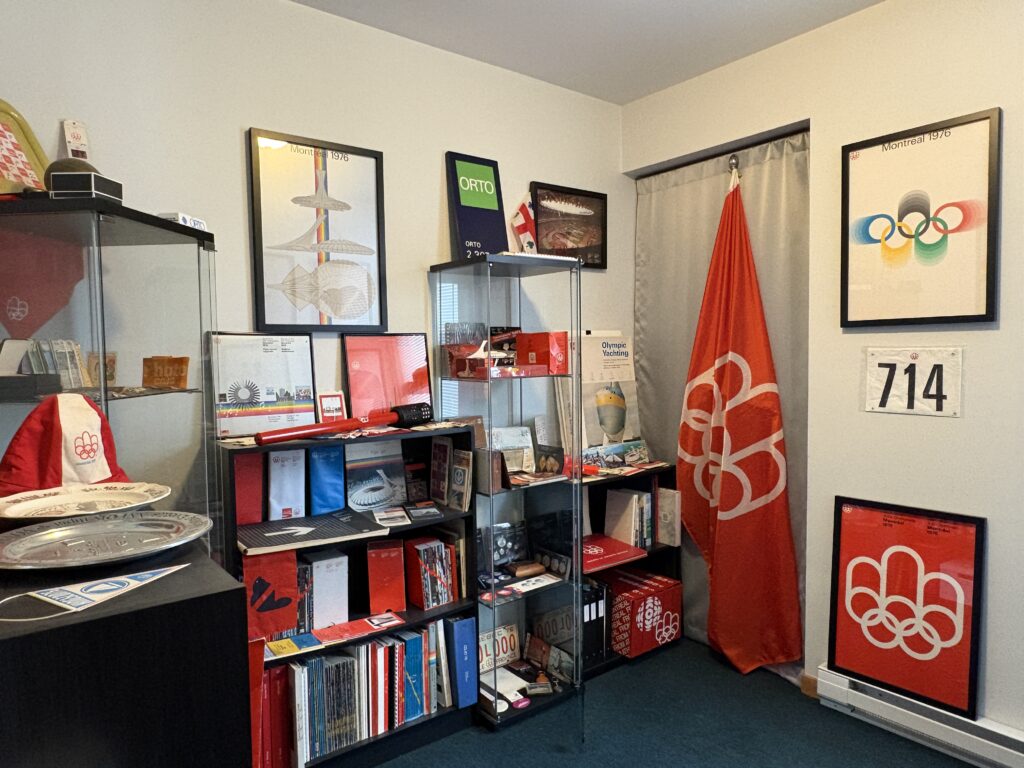
For nearly two decades, Taylor Smith has been preserving the legacy of the 1976 Montreal Olympics, assembling what he believes is the world’s largest private collection of memorabilia from Canada’s first Summer Games.
As Montreal marks the 50th anniversary of the 1976 Summer Olympics, the St. Francis Xavier University computer science professor hopes his collection will help more Canadians discover the stories behind a defining moment in the country’s history.
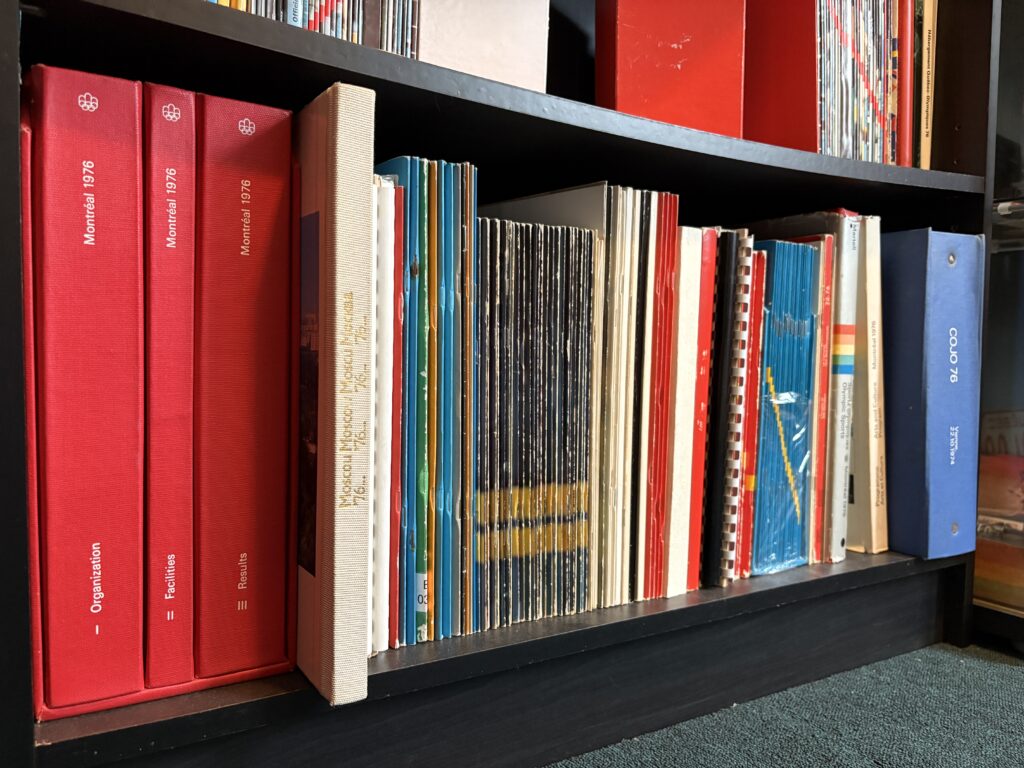
His collection includes everything from tickets, guidebooks and official rulebooks to uniforms, commemorative glassware, organizational documents and even original film from the Games. For Smith, however, the artifacts are far more than collectibles — they are pieces of Canadian history.

His fascination with the Olympics began long before he started collecting.
“I started when I was young, around 10 years old,” Smith said.
While visiting a used bookstore with his grandfather, Smith came across the official photo album from the 1976 Montreal Olympics. The silver cover with its colourful rainbow design caught his eye, but it was what was inside that left a lasting impression.
“It was full of photos and facts about the sports and whatnot, and it just captivated my interest in a really unique way. I would continually read and reread the book,” he said. “I’d be picking it up all the time to just glance at the photos, and it kind of sparked an interest in me.”
That curiosity soon grew beyond the pages of a single book. As he learned more about the Games, he began picking up souvenirs from thrift stores and second-hand shops whenever he came across them. What started with one book eventually evolved into an expansive collection documenting nearly every aspect of the 1976 Olympics.
Preserving more than memorabilia
Montreal hosted the Summer Olympics from July 17 to Aug. 1, 1976, becoming the first Canadian city to stage the Games. The event welcomed thousands of athletes from around the world and marked a significant chapter in both Quebec and Canadian history.
Smith says that broader historical context is one of the reasons the collection matters so much to him.
“I think to me, the biggest importance of the collection is just being able to study an underrated aspect of Canadian history and Quebec history,” he said.

He believes younger Canadians, in particular, have had fewer opportunities to learn about an event that helped shape Canada’s identity on the international stage.
“We learn a bunch of things about Canadian history in school every day, but something like the Olympics, the first and only Summer Olympics held in Canada, that’s something that not as many Canadians know about,” Smith said.
Rather than collecting for financial gain, Smith sees himself as preserving a story that deserves to be shared.
“I’m not in it for the money,” he said. “What I’d really like to see is, when I do pass it on, I’d like it to go to a museum or some kind of other institution that would allow more people to see all these items.”
For now, he hopes to document the entire collection online.
The stories behind the artifacts
Although the collection contains thousands of pieces, a handful stand above the rest.
Among Smith’s favourite artifacts is an authentic Olympic torch carried during the 1976 relay.
“When you think of the Olympics, you think of the flame relay,” he said. “I have a ’76 Olympics torch in my collection.”
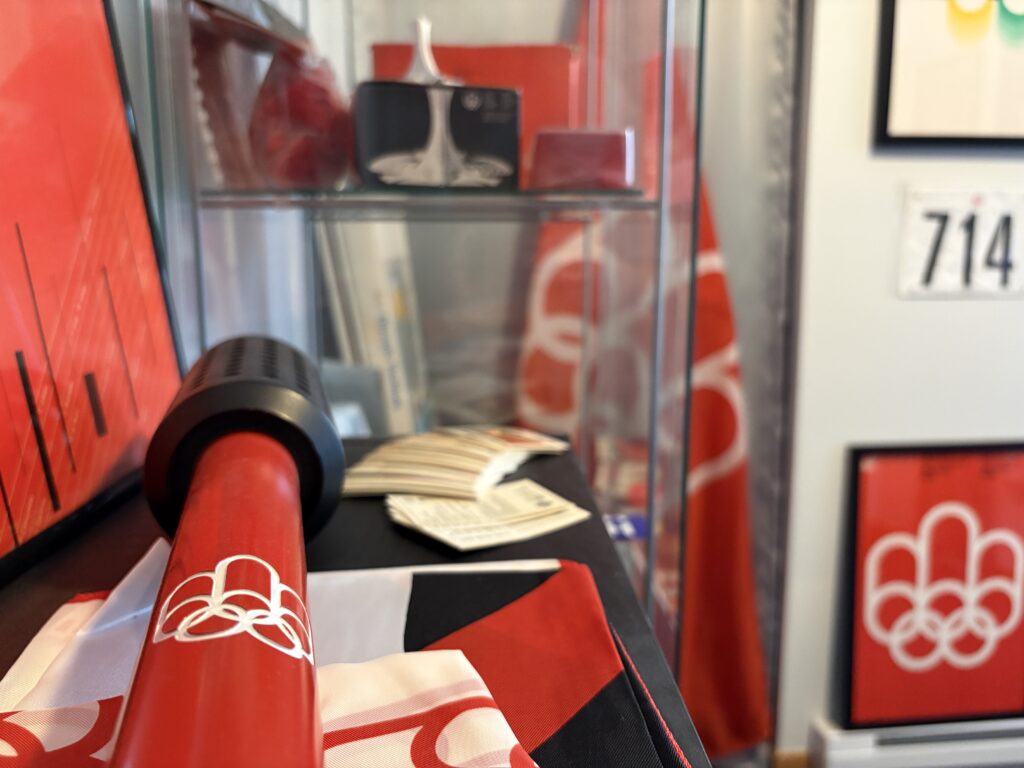
He estimates only about 500 relay torches were produced, making it one of the collection’s most significant pieces.
Yet one of his favourite stories involves a much less iconic object — a bronze statue of Amik, the beaver mascot of the 1976 Games.
The statue was originally presented to companies that financially supported the Olympics. Smith discovered one for sale in his hometown while attending graduate school, so he asked his mother to pick it up on his behalf.
The exchange happened after dark in the parking lot of a local arena while the seller attended his son’s hockey game.
“Picture my mother in this dark parking lot meeting up with a guy at his truck saying, ‘Do you have the beaver?’” Smith said with a laugh.
A collection built by a community
Smith says many of the rarest additions to his collection would not have been possible without the help of fellow collectors and friends.
He belongs to a network of Olympic memorabilia collectors who regularly help one another track down elusive pieces. Friends who enjoy browsing antique stores and thrift shops also keep an eye out, often sending him photos whenever they come across something from the Games.
“I’m really fortunate to have a bunch of sets of eyeballs looking out for me,” he said.
Their help has allowed the collection to continue growing even decades after the Olympic flame was extinguished.
Keeping Canada’s Olympic story alive
Although Smith describes himself as “an amateur historian,” his research into the 1976 Olympics has become a passion alongside his career in computer science.
By studying original documents and artifacts, he says he can better understand how Canadians experienced one of the country’s defining international events as it unfolded, rather than relying solely on hindsight.
“Just being able to dig into the history of a huge event like this, that’s really meaningful, both out of an interest for Canada and just as a personal professional research interest, you know, a little research hobby on the side for me. That’s what I really enjoy, what I get out of this collection,” he said.
As the 50th anniversary of the 1976 Summer Olympics is celebrated, Smith hopes his collection will inspire more Canadians to explore a landmark moment in the country’s history — and ensure its legacy endures for future generations.