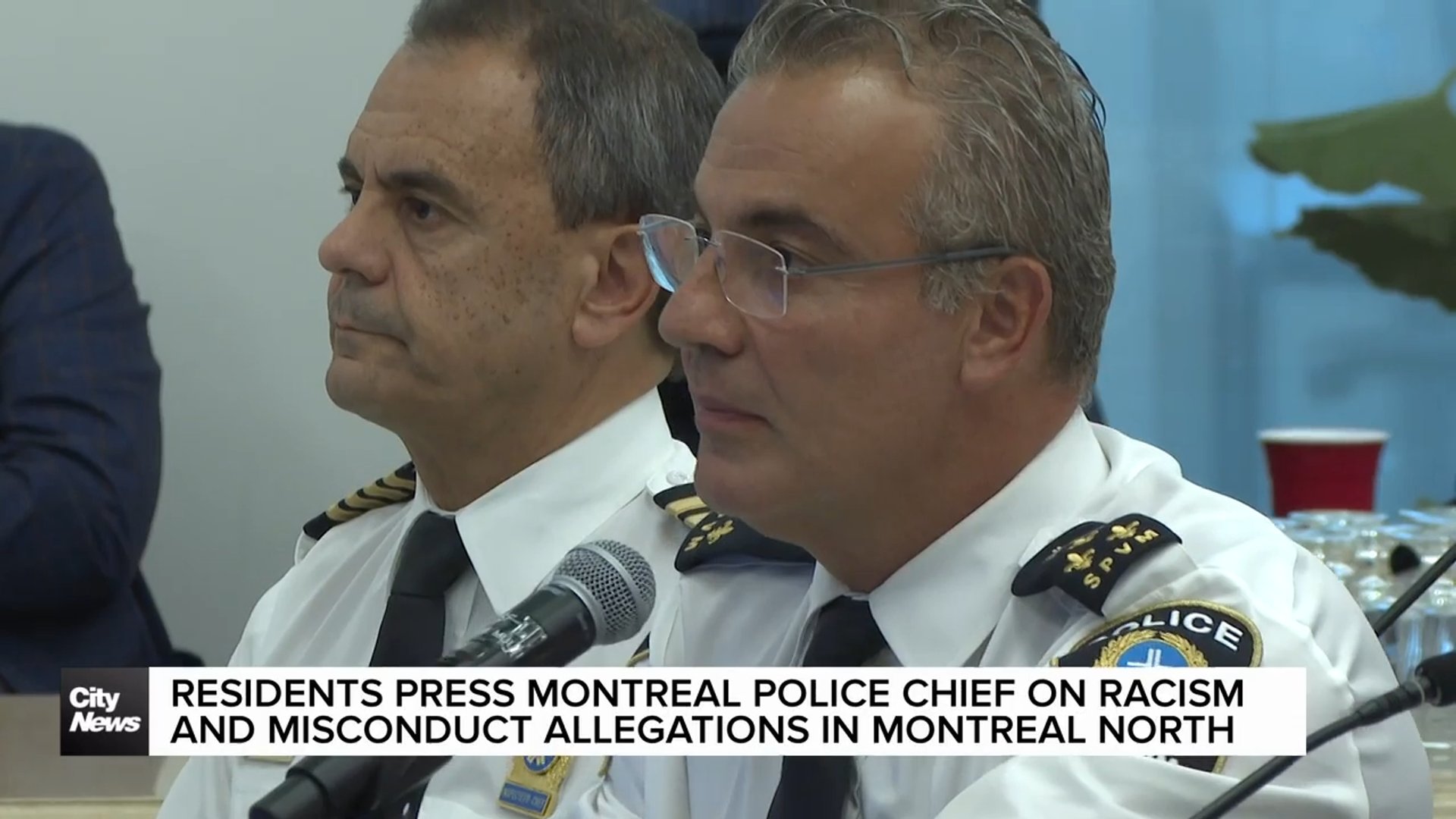
Montreal police chief vows to rebuild trust after racial profiling allegations in Montreal North
Posted August 12, 2026 1:25 pm.
Last Updated August 13, 2026 3:18 pm.
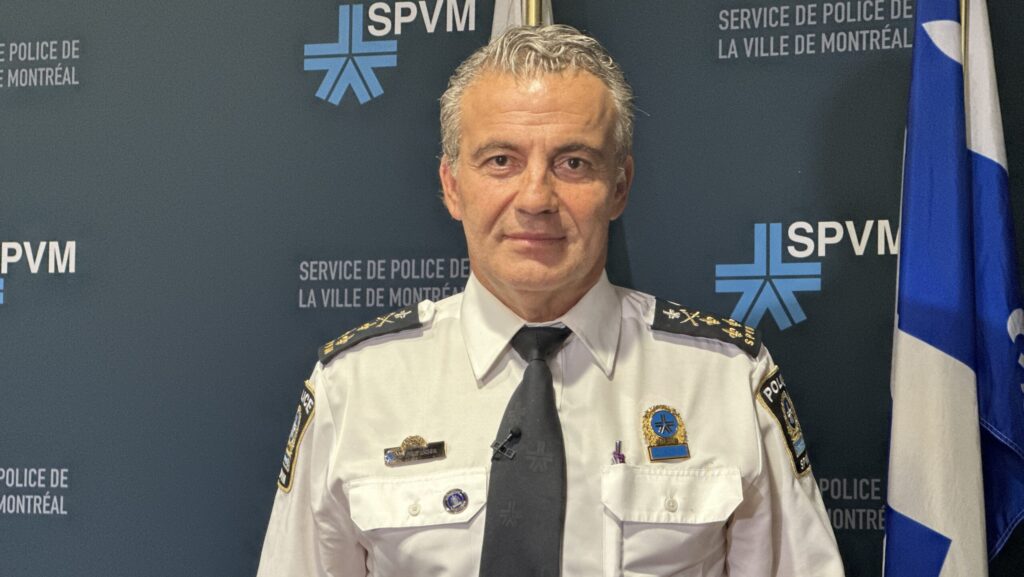
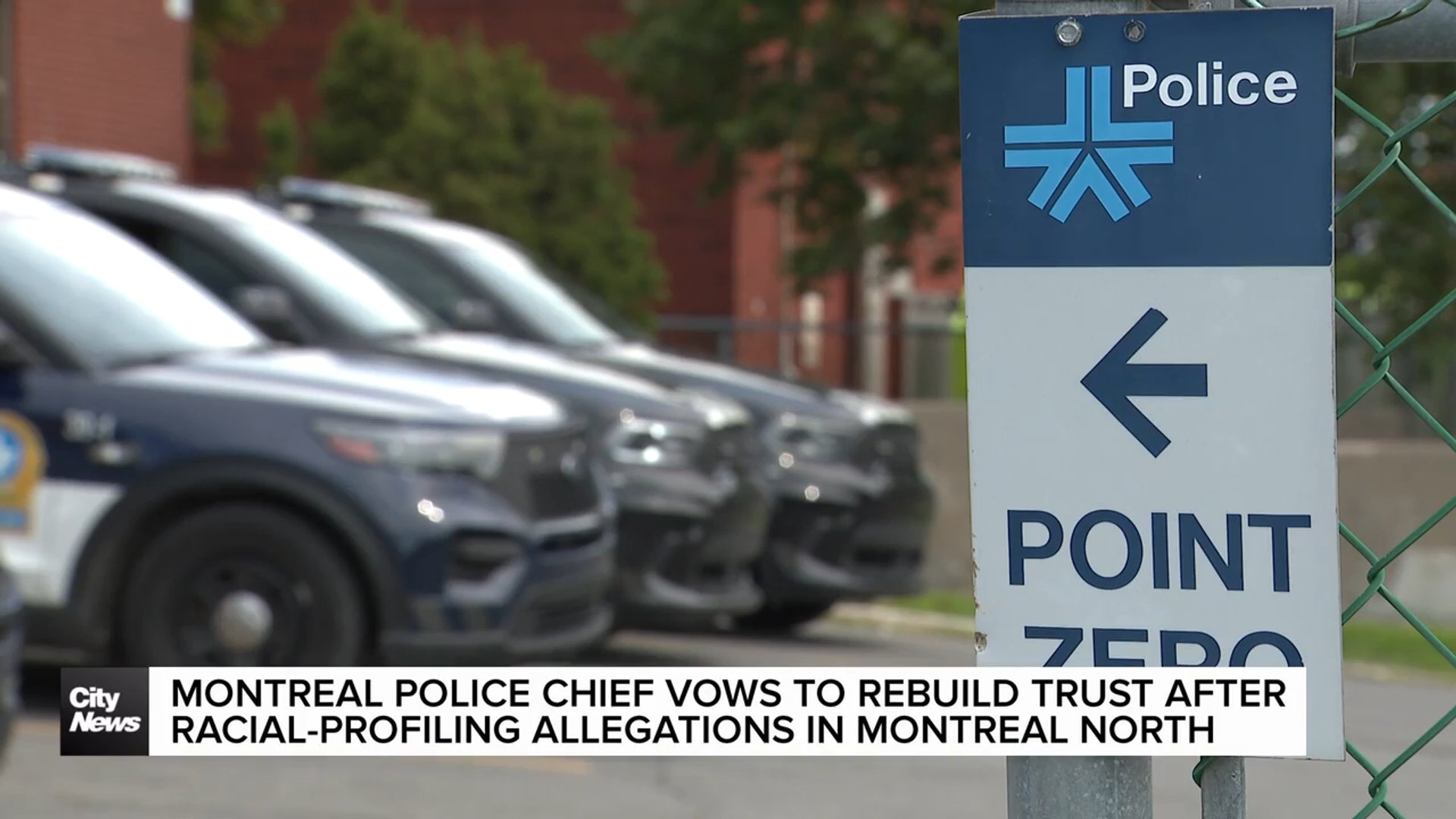
Montreal police Chief Fady Dagher says rebuilding trust with residents of Montreal North will require sustained work and a plan developed alongside the community, as the service faces renewed scrutiny over allegations of racist and discriminatory conduct by officers.
Speaking to residents at a public security commission meeting Tuesday, Dagher acknowledged the anger and mistrust expressed by people who say they have been waiting years for answers from police.
“Listening to them yesterday night wasn’t easy,” Dagher said. “I think it had to be done.”
The meeting came nearly two months after Dagher announced that a group of 16 officers assigned to the Montreal North station had been dismantled amid allegations of racist and hateful conduct.
Two officers were suspended in connection with serious allegations involving racism. A third officer was suspended several days later in a separate matter that was not necessarily related to racism. The remaining 13 officers have been reassigned within the police department and are not currently working in positions that put them in contact with the public in the field.
Dagher said the files are being sent to the Director of Criminal and Penal Prosecutions (DPCP), as the investigations proceed.

‘People want to see concrete results’
For Fo Niemi, executive director of the Center for Research-Action on Race Relations (CRARR), the message from Montreal North residents at Tuesday’s meeting was clear: listening is no longer enough.
“They want actions, they want to see concrete results, they want concrete change,” Niemi said.
Niemi said residents expressed impatience and anger over what they see as a pattern that has continued for years.
“There are certain degrees of impatience and… a little bit of anger, the fact that these things are happening year after year and change hasn’t come,” he said.
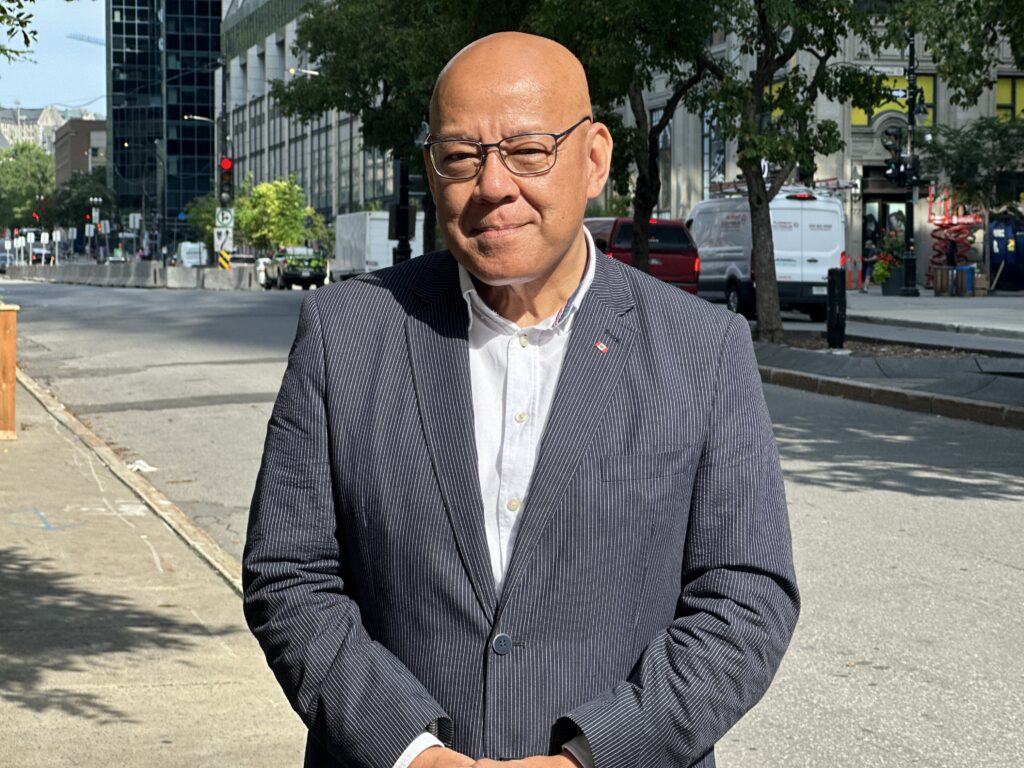
Niemi said he was encouraged by the police leadership’s willingness to listen and by Dagher’s apology for the pain and discrimination residents have experienced.
But he cautioned that rebuilding trust will not happen quickly.
“The message was just change is going to be fast, it’s not going to be easy and it requires sustained work in order to provide sustainable results,” Niemi said.
Dagher also emphasized that the process will take time. He said he wants to develop a concrete action plan with residents rather than impose one on the community.
The chief said more concrete measures will be announced in November, although he expects some actions to begin before then.
“I want to build this action plan with them,” Dagher said. “Co-built with them.”
He also proposed creating a committee that would include police and community members, as well as representatives from other departments and organizations, to help oversee and implement the plan.
“Let’s be accountable in that committee,” Dagher said.
Focus on young people
For Dagher, one of the most troubling parts of Tuesday’s meeting was hearing from mothers who questioned how they could convince their children to trust police.
He said those conversations have reinforced his desire to meet directly with young people in Montreal North in the coming weeks.
“They asked me, ‘Mr. Dagher, what should I tell my kids? How can they trust you?’” he said.
The chief said the issue goes beyond the current allegations because the relationship between police and young residents could shape how the two sides interact for years to come.
“If the next generation or the youth… don’t trust the police officer, what kind of relationship are we going to have in five, 10, 20 years with them?” Dagher said.
Niemi said those conversations must also include residents who believe they have personally experienced discriminatory treatment by police.
“Those people need to be heard, they need to be listened to,” he said.
He said authorities should also examine whether people who experienced alleged misconduct were unfairly penalized, fined or charged.
“We don’t lose sight of what we’re talking about. It’s the people on the ground,” Niemi said.
A question of police culture
Niemi said the allegations involving multiple officers should not be viewed solely as the actions of a few individuals.
“We’re talking about overall the issue of management and accountability,” he said. “Who was the manager there, what happened, how could this be allowed to take place, who knew and what did people know?”
Niemi said meaningful change would have to extend to how officers are recruited, trained, supervised and disciplined.
He also argued that the responsibility for rebuilding trust cannot rest with police alone.
“The city, Montreal, the local borough, the local chamber of commerce, all the major players in Montreal North have to really come together,” Niemi said.
He pointed to issues including poverty, a lack of employment opportunities, gun violence and limited access to recreation and public transit as factors that can contribute to a broader sense of frustration and hopelessness.
“Just to leave it to the police alone, the police does not have the resources,” Niemi said, adding that provincial and federal governments also need to invest in local communities.
Dagher speaks about his own experience
Dagher also described experiencing racial profiling himself.
As a young police officer investigating street gangs in the 1990s, he said he once made assumptions about people based on their appearance, including Black men driving luxury cars and wearing gold chains.
He said those assumptions repeatedly proved wrong and eventually forced him to reconsider how he approached policing.
Years later, after the 9/11 attacks, Dagher said he experienced racial profiling at a border crossing. Born and raised in Ivory Coast and of Lebanese background, he said the experience gave him a different understanding of the harm caused by discriminatory treatment.
“That’s why I understand what racial profiling is about,” Dagher said. “That’s why I know what kind of damage it does to a human person.”
He said the experience has influenced his efforts to address racial profiling and discrimination within policing.
Dagher acknowledged that change can be frustratingly slow, saying organizational and cultural change can take years, but he said the difficulty of the process should not become a reason to abandon it.
“We should never lose hope,” he said. “Even if it’s very difficult, we should never lose hope.”
For Niemi, the coming months will be an important test of whether Tuesday’s discussion leads to measurable change.
He said residents need to see tangible results and a sustained commitment from police, government, community organizations and the private sector.
“The people first, especially those who feel that they have been victims of police discrimination,” Niemi said. “Those people need to be heard.”
Dagher, meanwhile, said rebuilding the relationship in Montreal North will be a priority.
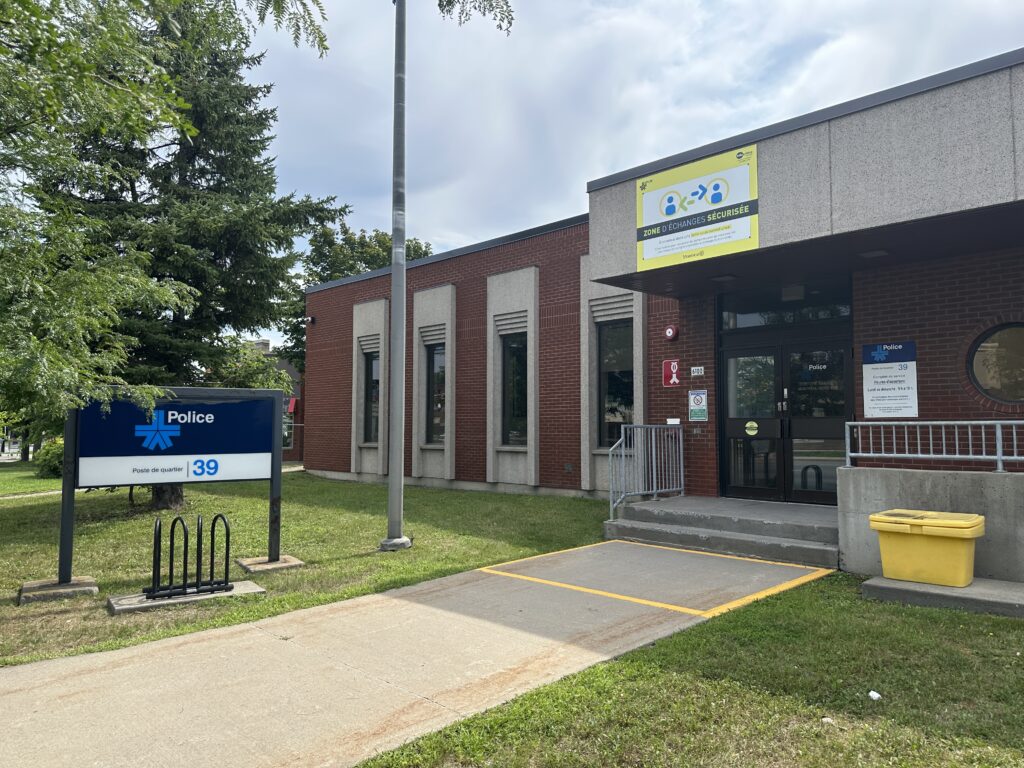
“I’m going to put all my energy to bring back that trust between the community and the police at Station 39,” he said.