Quebec ranks last globally for dying naturally of old age at home
Posted August 1, 2026 4:46 pm.
Last Updated August 1, 2026 4:53 pm.
The steady increase in requests for medical assistance in dying (MAID) has made Quebec the world leader in this practice, which accounted for 7.9 per cent of deaths in 2024–2025; however, Quebec ranks last globally in terms of the ability to die with dignity of old age at home.
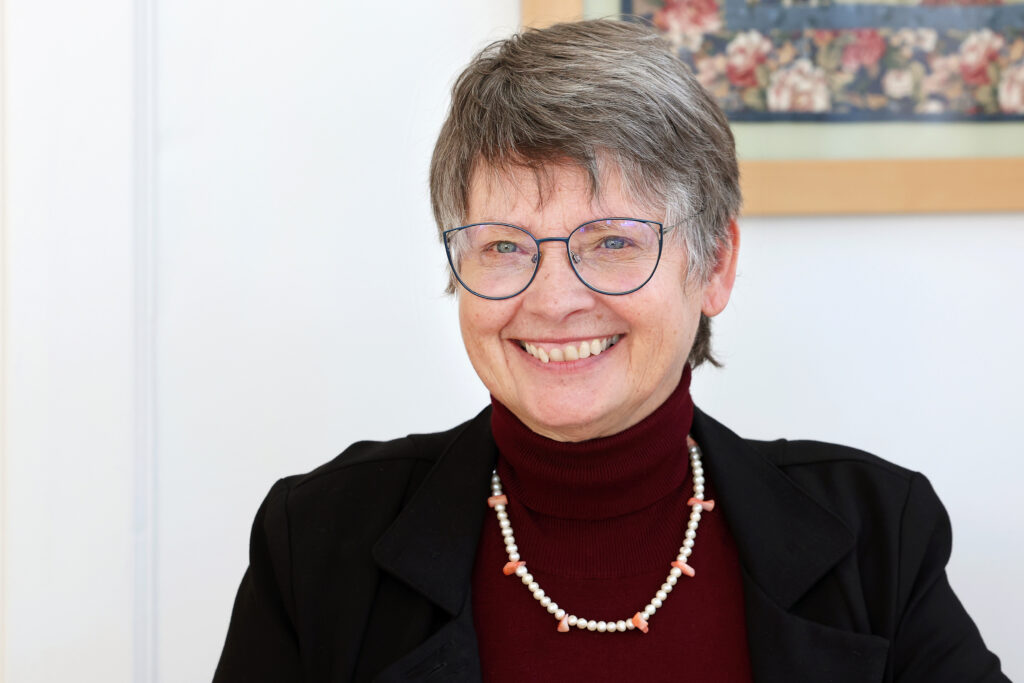
The proportion of natural deaths at home in Quebec, which stands at around 10 to 11 per cent, is dismal by comparison, explains Dr. Geneviève Dechêne, a family physician for 45 years who has worked exclusively in home-based palliative care for the past two decades. “The average rate of home deaths in the West is around 30 per cent, and in some countries, it can reach as high as 45 per cent. In English-speaking Canada, it’s 29.8 per cent. The lowest rate in the West is in Quebec. People come here to see what not to do.”
Home palliative care, however, costs only a fraction of what it costs in a hospital and helps relieve pressure on emergency rooms, yet the government is making little progress in expanding it. The family physicians needed would be available, but the system keeps them tied to hospitals—a situation unique to Quebec that affects not only home palliative care but the entire primary care system.
Fear of suffering
Dechêne is the founder of the SIAD (intensive home care) team at the Verdun CLSC. For her, there is no doubt that the lack of adequate palliative care contributes to this rise in medically assisted death, even though the Commission on End-of-Life Care refuses to make that connection.
“Quebecers have the insight to realize that they risk suffering. And when you’re at the end of life, suffering makes no sense if you know there’s another way to find relief. I think that plays a role in the alarming number of deaths by medical assistance in dying.”
It’s not easy to access palliative care outside of hospitals or long-term care facilities in Quebec. In its 2022 Directory, the Canadian Hospice Palliative Care Association listed only 35 hospice care facilities in Quebec, with a total of 335 beds—a minuscule supply for an aging population of just over 9 million people, a quarter of whom will be over 65 by 2030.
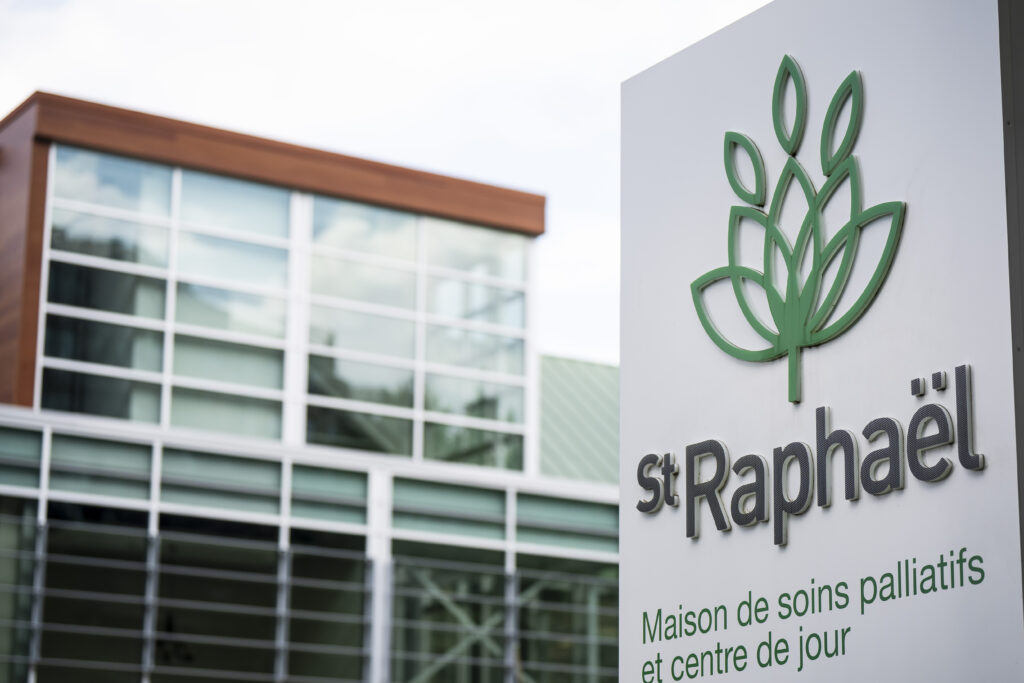
Another option, which is similar but rare, is a palliative care day centre. There are six such centres in the province, including one at the Maison St-Raphaël Palliative Care Home and Day Centre in Montreal. Véronique Després, director of multidisciplinary services, describes it this way: “It’s like an outpatient clinic for people living at home with a terminal illness, but who are not yet at the end of life. The idea is to provide services that will allow people to stay at home as long as possible.”
“We support people for a year, two years, and when they start canceling their appointments because it’s too difficult to get around, that’s a red flag. And it gives us time to prepare to admit them. The last thing we want is for them to end up in the emergency room. No one wants to spend their final hours in the ER,” says Després.
Finally, there are the SIAD teams, affiliated with a CLSC, which cover only a tiny fraction of the territory. According to Santé Québec, there are 25 of them in Quebec. “So 25 out of 360 CLSCs isn’t much, and that means at least 70 per cent of CLSCs don’t have a medical team for geriatric and palliative care at home,” sighs Dechêne, whose SIAD team of 15 doctors serves three CLSC territories—something that’s only possible in urban areas.
‘All the baby boomers will be dead’
Yet the practice has been in place since 2008. “At this rate, we’ll probably be in good shape by 2055, but by then, all the baby boomers will be dead,” she says. “But the crisis in hospital care—overwhelmed by people who don’t want to be there and don’t need to be there—is happening right now.”
Saying that these dying patients don’t need to be in the hospital isn’t just a figure of speech, explains Dechêne. “Let’s say a patient, in the final months of life, is suffering from heart failure. He’ll have fluid in his lungs and will go to the emergency room every week. But all he needs is an intravenous diuretic. It’s very easy to do at home, but he goes to the ER, spends two days there, comes back home, and then does this over and over again during his final year of life.”
That’s where a SIAD team, on call 24/7, comes in. “When we’re called to the deathbed of a man we’ve known for a year, we’re already prepared. It’s the same nurse and the same doctor who will go to the ER to see him. The family is prepared. They’ve already had the medication at home for months. They know how we’ll administer it and even how they could administer it themselves, and everything is done calmly. That’s the ideal scenario, as opposed to suffering terribly for 12 months with repeated visits to the ER.”
Dechêne provides home care for 165 patients with a wide range of health conditions. “Three-quarters of them are simply elderly people with aging organs, and they’re going to die because of those aging organs. That’s what we call death from old age. These patients won’t go to a nursing home or a palliative care unit because there’s a severe shortage of palliative care beds.”
End-of-Life tactical squad
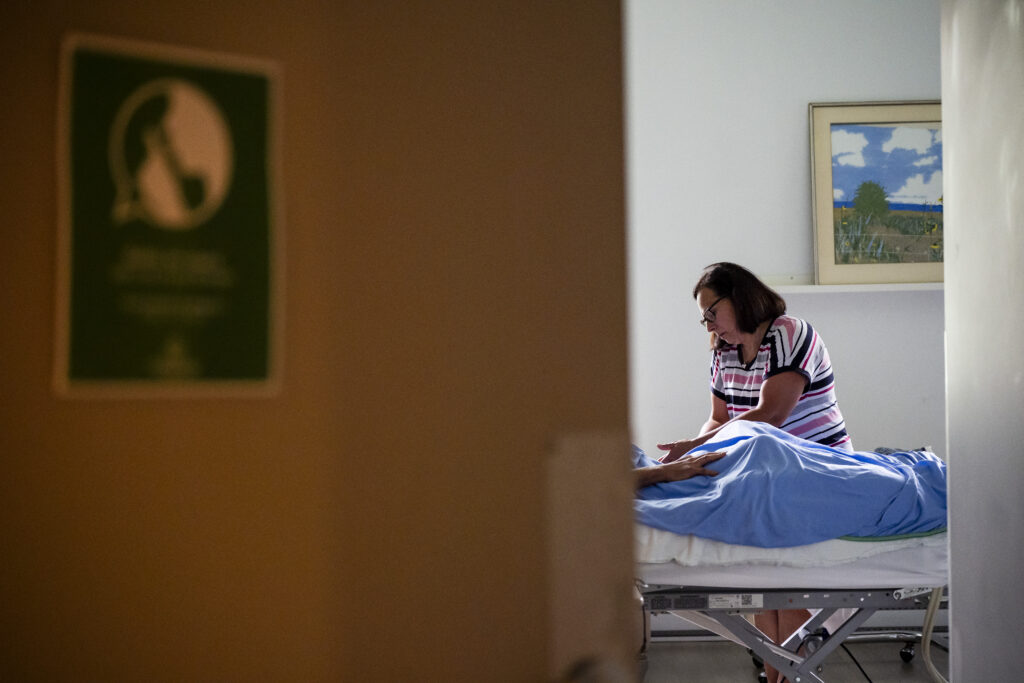
The organization Aux trois sentiers, meanwhile, is a pilot project that also provides end-of-life care at home, but only during the final moments of life, explains its founder and president, Dr. Caroline Ouellet, an anesthesiologist and intensivist. “We’re a bit like an end-of-life tactical squad specializing in managing all the symptoms that can arise at the end of life. We step in at the very end, during the final month, to make things as comfortable as possible. A lot happens in the human body during the dying process, and that often requires a constant presence.”
“What sets us apart,” she continues, “is really that we offer an alternative to hospitalization. We all share the same goal: to keep our patients out of the emergency room. We’ll get you out of that four-person room in a run-down hospital and bring you back to the comfort of your own home.”
In its January 2024 pre-budget brief, FADOQ cited studies showing that “SIADs are responsible for a 65 per cent reduction in hospitalizations. Furthermore, 60 to 65 per cent of patients receiving care die at home, and costs during the final year of life are reduced by 50 per cent.”
1,500 doctors available
With such savings, one might be led to believe that the government would invest in this area, but that is not the case. Dechêne does not mince words when it comes to denouncing the hospital-centric nature of the Quebec healthcare system. “The percentage of hours worked by Canadian family physicians in hospitals—in emergency departments and inpatient care—is around 15–18 per cent. But in Quebec, when François Legault was health minister, he forced family physicians to work in hospitals under threat of pay cuts to curb budget deficits in certain hospitals. As a result, 40 per cent of all hours worked by family physicians are now spent in hospitals. This means we have 1,500 too many family physicians working in hospitals compared to Ontario, Alberta, France, and Belgium—performing tasks that could be handled by specialists, just as they are everywhere else.”
She readily acknowledges that family doctors like this model—which pays them very well, is highly valued, and gives them privileged access to specialists, unlike their colleagues in private practice—except that it forces the government to pay twice. “We pay the family doctor, and we pay for the specialist’s consultation. It’s not very cost-effective.”
Pleasing the FMOQ?
She sharply criticizes her union, the Fédération des médecins omnipraticiens du Québec (FMOQ). “You’ll hear my federation, the FMOQ, say, ‘Yes, but it’s the mixed-practice model that we family physicians love.’ We’ve really made the FMOQ happy by allowing them to perpetuate this model that doctors love. My question is: does the public like this model, which deprives them of 1,500 full-time family physicians per year?”
Specialists won’t complain about it, she points out. “Hospital duties are demanding. Specialists in urban areas—where there are plenty of them and no shortage—are quite happy not to have to do them, whereas it’s the specialists who handle them in other Canadian provinces and in Europe. Specialists are trained to manage hospital care. That’s their area of expertise. Specialists are hospitalists,” she states firmly, noting, however, that family physicians will always remain in charge of emergency care, palliative care, and care in regional hospitals, where specialists are scarce. This is also the case elsewhere in Canada, but not in urban areas, she insists.
However, while placing greater emphasis on the development plans for these teams, Santé Québec acknowledged that “there is no separate policy specific to SIADs, since it is not a program in and of itself, but rather a service model integrated into the overall home support offering, which aligns with the guidelines of the Mieux chez soi policy.” In other words, these are local initiatives.
The well-known “Mieux chez soi” policy clearly states that “access to medical visits at home or in a clinic outside of regular business hours is associated with a lower rate of emergency room visits among people aged 65 and older who receive home care, just as home visits by physicians are associated with a lower hospitalization rate for this population.” However, the same document also echoes Dechêne’s remarks: “The difficulty in accessing a doctor in a timely manner can be explained, among other things, by the small number of doctors who make home visits (…) Medical practice in home care appears to be little known and unattractive to many doctors.”
A ray of hope from the minister
When asked about the possibility of adding SIAD teams during the May 8 announcement of an investment in home assistance (rather than home care) services, Health Minister Sonia Bélanger first praised Dechêne’s team, “one of the first CLSCs to develop intensive clinical follow-up at home, particularly for people receiving end-of-life care, because people want to spend their final days in their own homes. So, to achieve that, we need to step up home support services. We are fully committed to that,” she stated before highlighting her government’s track record in home care.
When asked to elaborate on the issue of palliative care at home, Bélanger referred to the agreement reached with the FMOQ last December—the details of which are still unknown nearly eight months later—offering a glimmer of hope: “The entire aspect of recognizing family physicians who work in hospitals, in emergency departments, in long-term care facilities, and in home care is also part of the agreement. The FMOQ wants to ensure there is a balance (…) I don’t want to go into detail, but there are provisions to naturally recognize the role of physicians in long-term care facilities in end-of-life care.”
‘Spend to save‘
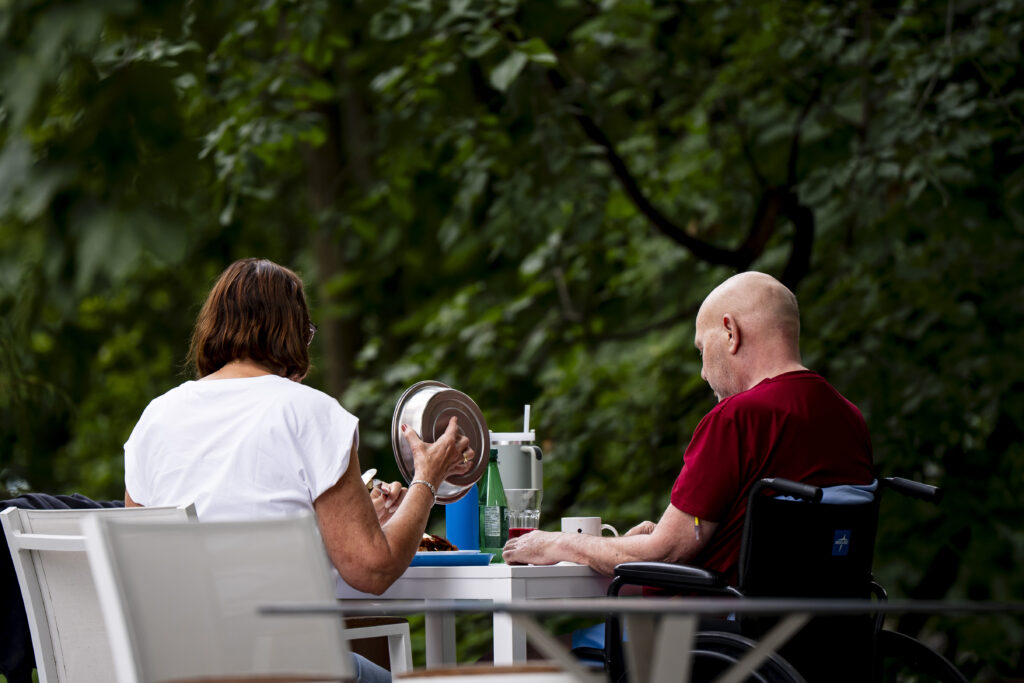
Ouellet believes that, to develop home-based palliative care, “it takes bold, courageous people, because it’s certainly going to be expensive at first. It’s a philosophy that we don’t tend to apply in Quebec. Sometimes, you have to spend to save.”
“If we keep sending our dying patients to the hospital, sooner or later we won’t be able to perform surgeries, we won’t be able to administer chemotherapy, and we won’t be able to treat pneumonia. The numbers just don’t add up,” she argues.
Older Quebecers, she says, have experienced the deaths of their parents “and they’ve made a promise to themselves not to die that way. I don’t want to be in pain, I don’t want to lose my mind, I don’t want someone changing my diapers. I don’t want to put my children through that.”
This, she believes, is one of the reasons for the popularity of medical assistance in dying (MAID). “There has been a great, great deal of emphasis placed on the link between dignity and MAID as the only way to die with dignity, when that’s simply not true. You can very well die with dignity when you have access to good end-of-life care.”
“If we don’t remain the champions of the AMM, it will mean that we’ve successfully developed and funded robust palliative care as an alternative to hospitalization—which, yes, will cost money, but will save the healthcare system, citizens, and society much more in the long run. And then we’ll be able to say that we’ve won our battle.”
In the previous version of this article, La Presse Canadienne erroneously stated that Dechêne headed the SIAD at the Verdun CLSC. This is not the case, although she is its founder.
–This report by La Presse Canadienne was translated by CityNews