‘It should be every day’: Montrealers take part in ‘Every Child Matters’ march to show support, reconnect with culture
Posted September 29, 2026 1:11 pm.
Last Updated September 30, 2026 5:04 pm.
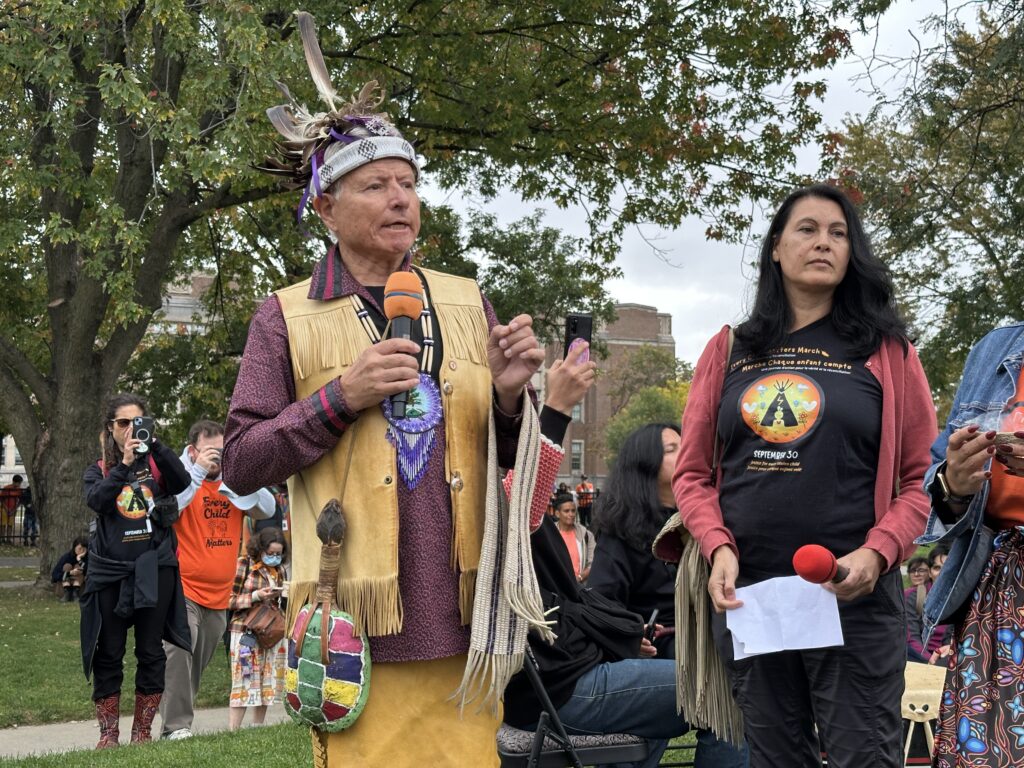
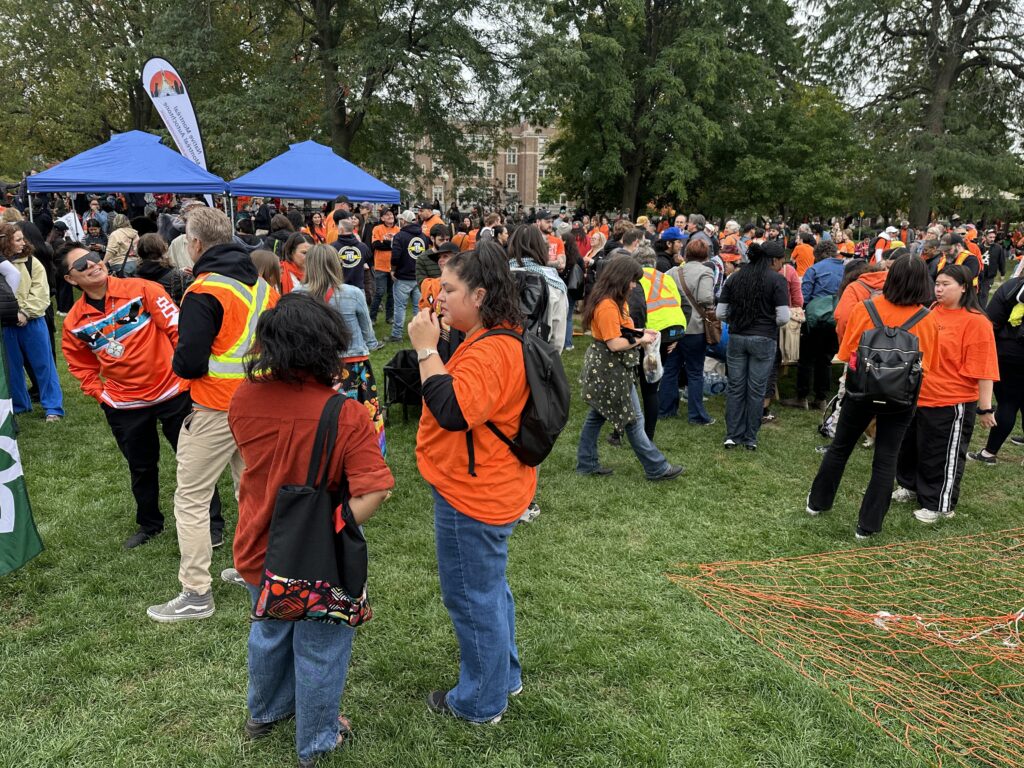
“Every child matters” and “You are not forgotten” were among the messages on signs carried by Montrealers who took to the streets Wednesday for the annual Every Child Matters March to mark the National Truth and Reconciliation Day Wednesday.
The annual event, organized by the Native Women’s Shelter of Montreal, honours children taken forcibly into the residential school system, the survivors and families.
“I like organizing this because I feel like actions speak louder than words,” said march organizer Nakuset, the shelter’s executive director. “And when we have, you know, a thousand people or two or three thousand people that show up and are walking down the street, there’s a reason why. And I choose the speakers very carefully because all of them have different messages that are going to resonate with the audience.”
Organizers say this year’s event carried a “renewed sense of urgency and purpose” as the final judgement by the Permanent Peoples’ Tribunal was also released Wednesday following public hearings held in May in Montreal.
The tribunal ruled that Canada is in violation of international law for failing to investigate and prosecute crimes against Indigenous people. The human rights panel said Canada was also in “a deliberate state of contempt” for what it calls a failure to sign and enforce international human rights doctrines on genocide, enforced disappearances and apartheid.
The march began at Westmount Park and ended at Cabot Square.
Montreal father Nicholas Letendre told CityNews he was taking part in the march to reconnect with his culture and share that with his children.
“And keep the ball rolling. Keep it going and sharing it with future generations to come. Spread the message.
“I’ve always believed we are one people. I see the walk being so much more diversified this year, support from all types of cultures and people all over the world.”

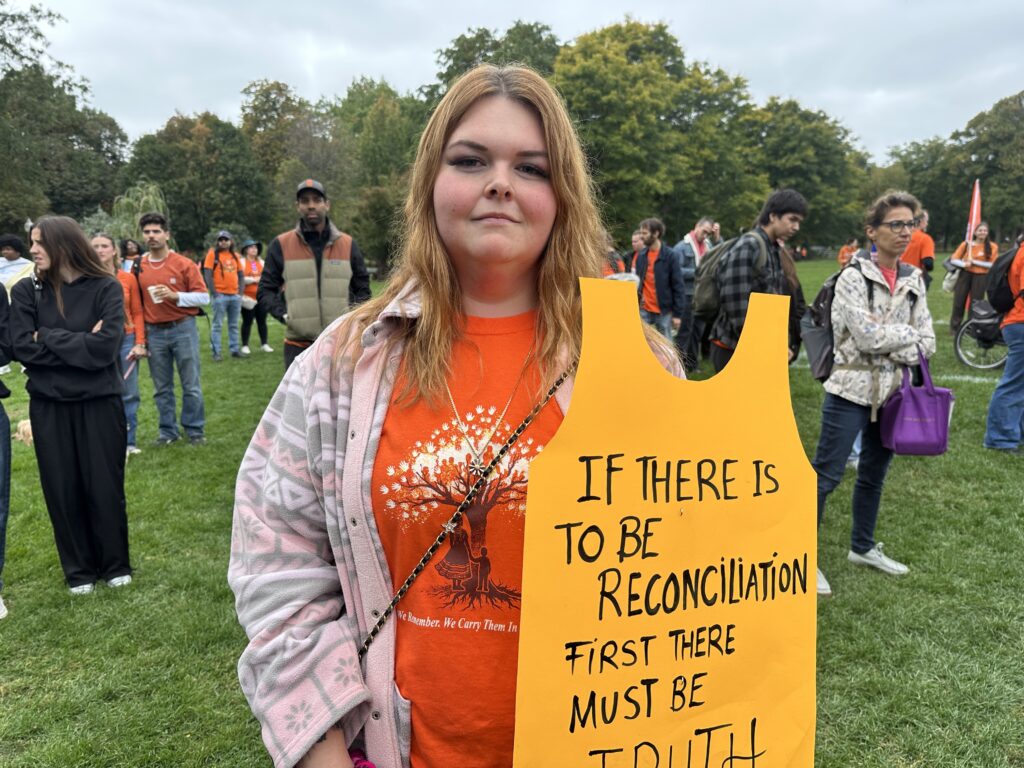
Dressed in orange like many others, Jesse Rochon Dupras said it was important to show up.
“To recognize everything that was done, everything that’s not said, for the truth to be said, and also just to be supportive of the cause,” she said.
Dupras held a sign that read “If there is to be reconciliation, first there must be truth.”
“It should move everyone, it should involve everyone,” she said. “But everything about the missing children, everyone, the cause, it should be every day. We have one day today and in June, but it should be every day.”
Stéphane Raeppel, a resident of Durham-Sud, said he wants to see concrete actions — not just words.
“It should be important for everyone in Canada especially,” Raeppel said. “And at least it should be important for people, for the politicians. Because they should be involved also. Not only speaking, but they should be also involved.”

Several speakers and performers participated, including Ellen Gabriel, Kevin Deer, The Manitou Singers, Henriette McKenzie, Kahsennenhawe Sky-Deer, Karen Lajoie Petiquay, Alex McComber, Barbara Diabo, and Leonard Sumner.
“I actually have two children that are with me,” Nakuset said. “Their schools are here. That’s huge because they’re the next generation. They’re the ones who are going to have to… I’ll have to pass the torch to them and they’re going to have to continue this fight.
“It’s a lot that the government needs to do. But we also need people that are wanting to do the fight. And I think when they show up and they hear it’ll inspire them and then they’ll also take it on. So that’s the hope.”


The Permanent Peoples’ Tribunal also released several recommendations for governments at all levels to investigate and maintain records of survivors and victims of residential schools, MMIWG as well as reforms to child welfare systems and funding for improving living conditions in consultation with Indigenous communities.
“After widespread, systematic and most serious violations of human rights, States have the duty to restore and guarantee the fundamental rights of the victims,” the judges wrote. “This includes the obligation to investigate, prosecute and punish the perpetrators, and to provide truth, reparations, and guarantees of non-recurrence.”