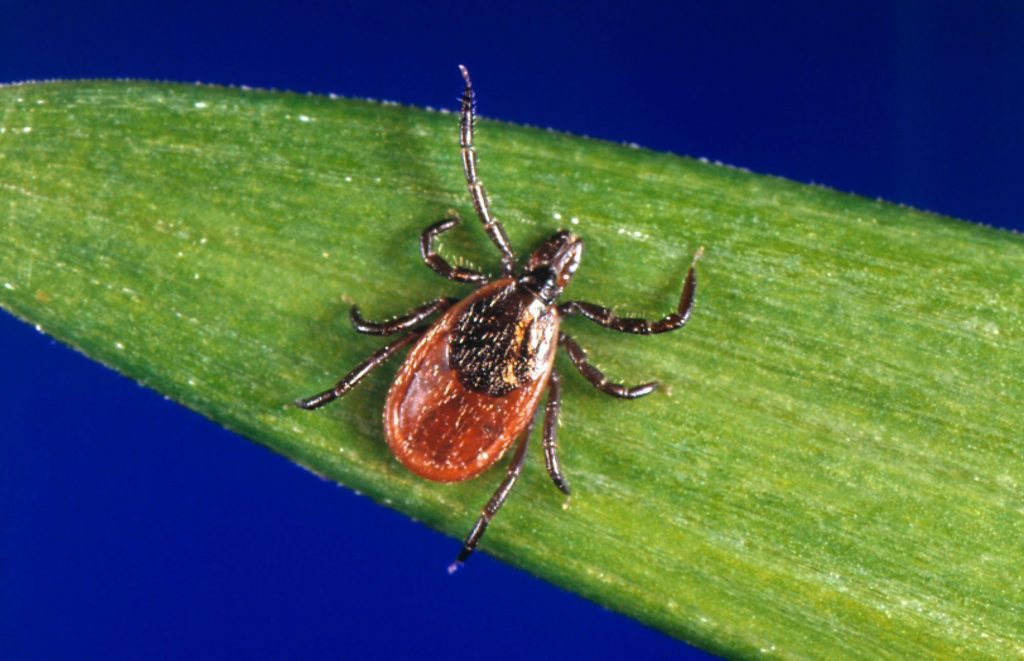
Lyme disease continues to rise in Quebec; experts say climate change to blame
Posted May 26, 2025 4:10 pm.
Last Updated May 26, 2025 5:10 pm.
The increase of Lyme disease in Quebec is cause for concern, according to experts.
Over the past 15 years, the number of reported cases of Lyme disease and other tick-related illnesses in Quebec has risen.
“We’re still in those hundreds of cases of Lyme disease,” said Kirsten Crandall, a scientific advisor at the Institut National de Santé Publique du Québec (INSPQ). “It’s a trend that we’ve been seeing over the past several years.”
Infectious disease specialist Dr. Donald Vinh adds Lyme disease went from “rare to now endemic” in the province.
Experts say climate change is a factor in the increase.
“If you have climate change that shortens the winters or makes winters warmer, then that favours more ticks to feed off of more animals, which can then spread to humans,” Dr. Vinh explained.
“Climate change is going to risk bringing other infections into Quebec as a result of all the environmental changes, which means that we need to take this seriously.”
With research spanning a decade, McGill University associate professor in biology Virginie Millien explains that a tick can travel once attaching to a host such as birds, deer, and other small mammals.
“They need to find the right host,” Millien said. “And climate change is also driving hosts further north. They’re shifting the distribution.
“The conditions are getting better for the ticks to establish and survive. And it’s almost inevitable. You know, I don’t know what would stop it.”
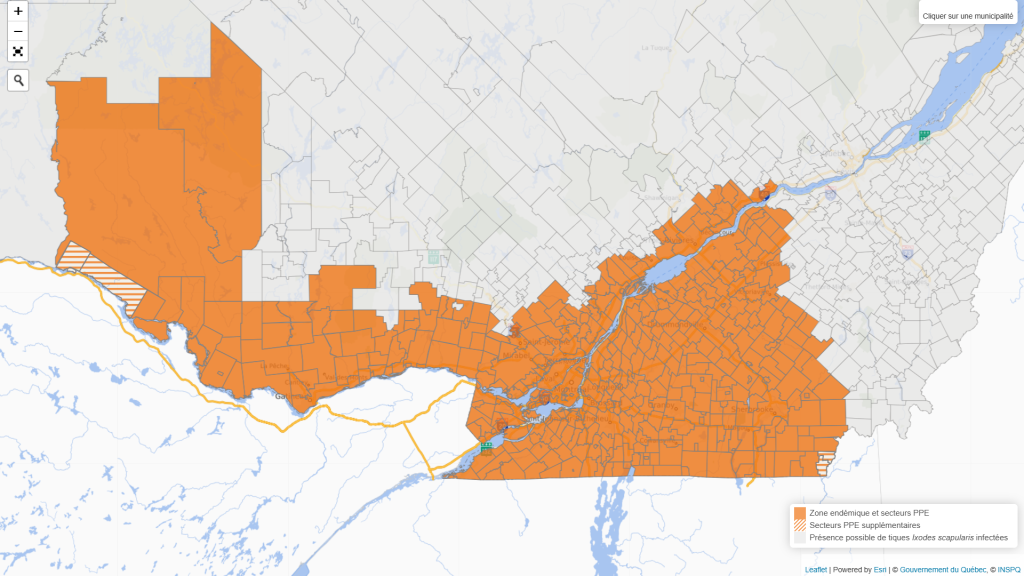
Experts say due to a delayed spring season, Quebecers are advised to watch out for ticks when going out in the wilderness.
“Ticks may be found in pretty much any location in Quebec,” said Crandall. “But those very high endemic areas where they’re very established, it’s mostly in southern Quebec. And we’re seeing areas that are becoming a little bit more emergent, like we say, just outside of that endemic area.”
The first symptoms of Lyme disease are a redness that grows larger over time, accompanied by fever and muscle or joint pain; it can be treated with antibiotics. Experts say if you are bitten by a tick, call Info-Santé 811.
“You can look for them,” said Vinh. “And of course, you can do a lot of other protective measures, such as tick repellent, or even just taking showers after going out into the wild areas where there may be ticks.”
“If by any chance you miss a tick and then you see the rash coming, you go to the pharmacist and you can get the antibiotics that’s going to stop everything,” added Crandall.