Sex workers rally in Montreal to decriminalize their work across the country
Posted October 7, 2022 12:12 pm.
Last Updated October 7, 2022 11:16 pm.
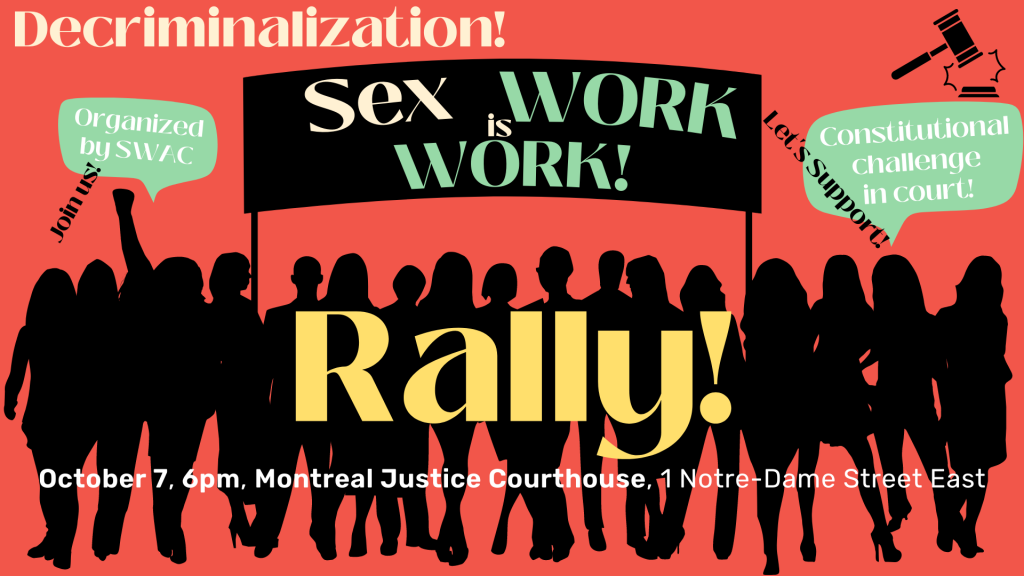
Sex workers and allies rallied in front of the Montreal court house Friday evening demanding their work be decriminalized across the country.
The group, Sex Work Autonomous Committee (SWAC), is demanding the immediate repeal of the Exploited Persons and Communities Protection Act, which they say “aims to eradicate sex work, creating fertile ground for exploitation and the maintenance of unsafe and substandard working conditions.”
The rally took place as the Canadian Alliance for the Reform of Sex Work Laws’ constitutional challenge concludes its hearings in the Ontario Superior Court.
The Canadian Alliance for Sex Work Law Reform, a coalition of sex workers and advocate groups, launched the landmark constitutional challenge in March 2021.
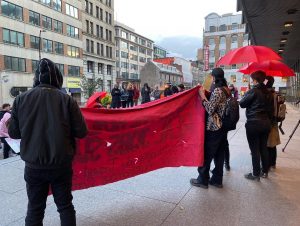
Rally in Montreal on Oct. 7 to decriminalize sex work. (Credit: Pamela Pagano/CityNews)
Their arguments were heard this week in the Ontario Superior Court. Arguing that sex workers are being harmed and exploited instead of protected under the new law.
According to SWAC and advocates, the current law has harmful impacts on the lives of sex workers.
“While sex workers and their allies have reminded the government of the urgent need to act over the past few years, the government continues to ignore its responsibilities to protect our safety and fundamental rights,” said Melina May, a sex worker and SWAC activist.

Rally in Montreal on Oct. 7 to decriminalize sex work. (Credit: Pamela Pagano/CityNews)
“Sex workers have been saying for years that these laws are what make our work more dangerous,” explains Melina May.
According to Adore Goldman, another SWAC activist, these policies that claim to protect victims of sexual exploitation and trafficking are ineffective: “Consenting sex workers and those who are trafficked are all affected by criminalization. These policies set the stage for more exploitation and stigmatization, not the other way around.”
According to the committee, immigration laws, in addition to criminal provisions related to sex work, encourage increased surveillance of migrant workers who may face loss of status, detention and deportation.
“The decriminalization of our work would allow us to have access to labor rights, as is the case in other industries,” said the activist. This status of worker, according to the activist, would allow sex workers to benefit from adequate protections in case of accident and parental leave, but especially to hold employers responsible for the safety of workers in the workplace, and allow sex workers to organize among themselves.

Rally in Montreal on Oct. 7 to decriminalize sex work. (Credit: Pamela Pagano/CityNews)
“We could denounce situations of harassment and abuse through the legal mechanisms in place,” said Melina May.
“We want to be heard and we want our experiences to be taken into account. We don’t want to wait years for the law to go to the Supreme Court. What we want is to finally be able to work with the means to ensure our safety in our workplaces, and for our rights to be recognized, and for that to happen, we have to start by decriminalizing sex work!”