Montrealer with congenital heart defect reflects on surviving cardiac arrest — and finding purpose through pain
Posted February 5, 2025 7:00 pm.
Last Updated February 5, 2025 9:53 pm.
Montrealer Émile Beauchamp was born with Tetralogy of Fallot, a combination of four defects that make the level of oxygen in the blood too low.
“I’ve learned to live with it, but it’s been something that’s been with me my whole life,” he said.
February is Heart Month, an essential period for raising awareness about cardiovascular health, and the Heart & Stroke Foundation is shining a light on congenital heart disease (CHD) through its new report, “Surviving to Thriving: Improving Care for People Living with a Lifelong Heart Condition.”
The foundation says the report — its first on congenital heart disease — features stories of clinical researchers and people with lived experience with the condition.
“The report that we released yesterday highlights a very inspiring and important fact, which is that more people are surviving with congenital heart disease and living longer. And this is really an exciting time for us to bring congenital heart disease into the spotlight,” said Kelly van Heugten, Manager, Heart, at the Heart and Stroke Foundation.
“February is Heart Month, and we’re so lucky to be able to showcase congenital heart disease as the focus for our awareness campaign this month. It’s a really important time for Heart and Stroke to raise awareness and the profile of congenital heart disease across Canada.”
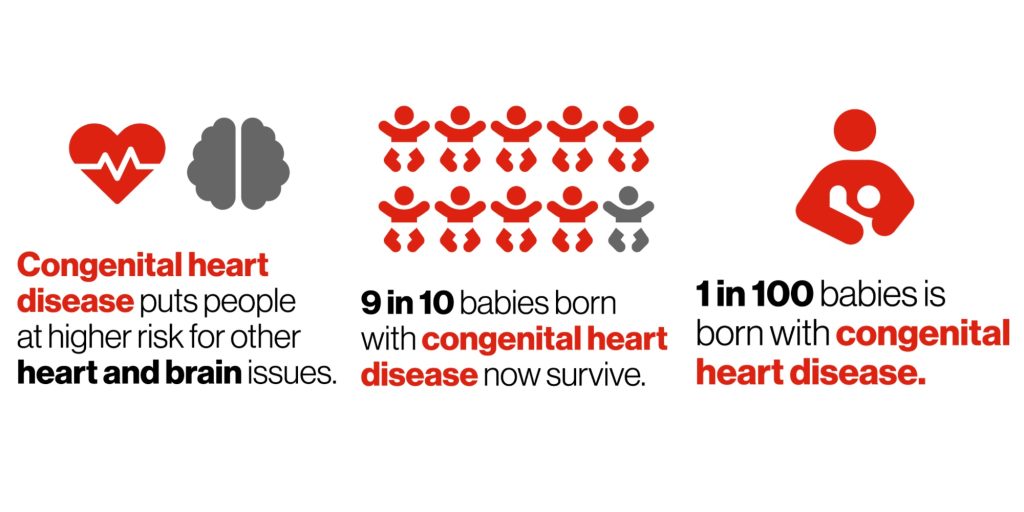
CHD is a condition that approximately one in 100 babies are born in Canada.
Heugten explains that “CHD is a condition that people are born with and they live with for their entire lives. And so in some cases, CHD can be diagnosed before or at birth. And in other cases, it is not diagnosed until someone ages and the stress of aging puts stress on the heart.”

For Beauchamp, the diagnosis took a toll on him at a young age.
“As a child, I’d say it was a little hard to be told that your dreams wouldn’t necessarily become reality,” he said. “I was a big athlete. I loved playing sports — mostly contact sports, which aren’t quite compatible with any form of heart disease, if I’m being honest. And hearing from the doctors that I was going to have to maybe stick to the couch, maybe stick to computers and various non-physical activities was really hard because that was pretty much my whole life.
“So obviously, that was a shock, especially at a young age when you’re not quite ready to deal with such shocks.”
At times, it was something that was hard to comprehend.
“I got an explanation,” he recalled. “I can’t remember who and when, but obviously at some point, I kind of realized, like, OK, physically I’m different than other people. And yeah, I kind of, as soon as I understood it, the ‘why’ really became, ‘Why do I have this?’ It’s not necessarily, ‘Why can’t I do these things?’ It’s more like, ‘OK, well, clearly there’s an issue with my heart. Why mine? Why not someone else’s?’
Many people are living with CHD—some 257,000 people in Canada.
“Nine in ten babies born with congenital heart disease now survive to adulthood and this has not always been the case. So, since the 1970s and ’80s, there has been a remarkable increase in survival for infants and children with CHD. There’s a growing proportion of adults living with CHD. So, about two-thirds of people with CHD are adults. And as more children with CHD become adults, the overall CHD population will continue to grow,” said Heugten.
“One Canadian study found that CHD prevalence increased by 11 per cent in children and 57 per cent in adults between 2000 and 2010,” she added.
According to the Heart and Stroke report, having CHD puts people at higher risk for other heart, brain, and cognitive issues including depression and anxiety. CHD more than doubles the risk of stroke; the risk of heart failure is nine to 13 times higher; and people with CHD have 10-20 times the risk of developing atrial fibrillation.
“Individuals with CHD have a higher prevalence of a wide range of other conditions. And they can occur at an earlier age in those with CHD compared to the general population. So, this includes high blood pressure, high cholesterol, diabetes, as well as lung, kidney, and liver dysfunction. Not to mention depression and anxiety, which are common in those living with CHD. And it is associated with a lower quality of life and health status. But despite the high mental health burden, mental health conditions are underdiagnosed and undertreated in this population,” explained Heugten.
Surgeries as a baby
Throughout his life, Beauchamp has undergone several surgeries; the first one occurred when he was only six months old.
“I was very young for the majority of them,” Beauchamp said. “So especially when it comes to open-heart surgery, I had a couple, I think one or two, when I was a toddler, a baby. I can’t describe those. I don’t have any memory of them.
“But the more recent ones were in my teen years. So when I was 12, 14, and 15, actually, two of them were done by catheterization, which, I mean, were very simple, to be honest. It’s not day in, day out, but we’ll say maybe two or three nights in the hospital, which for me is rookie numbers. It’s something I’m used to. In terms of recovery, it’s maybe like two or three weeks of taking it easy, relaxation. And so obviously to me, that’s something I consider light.”
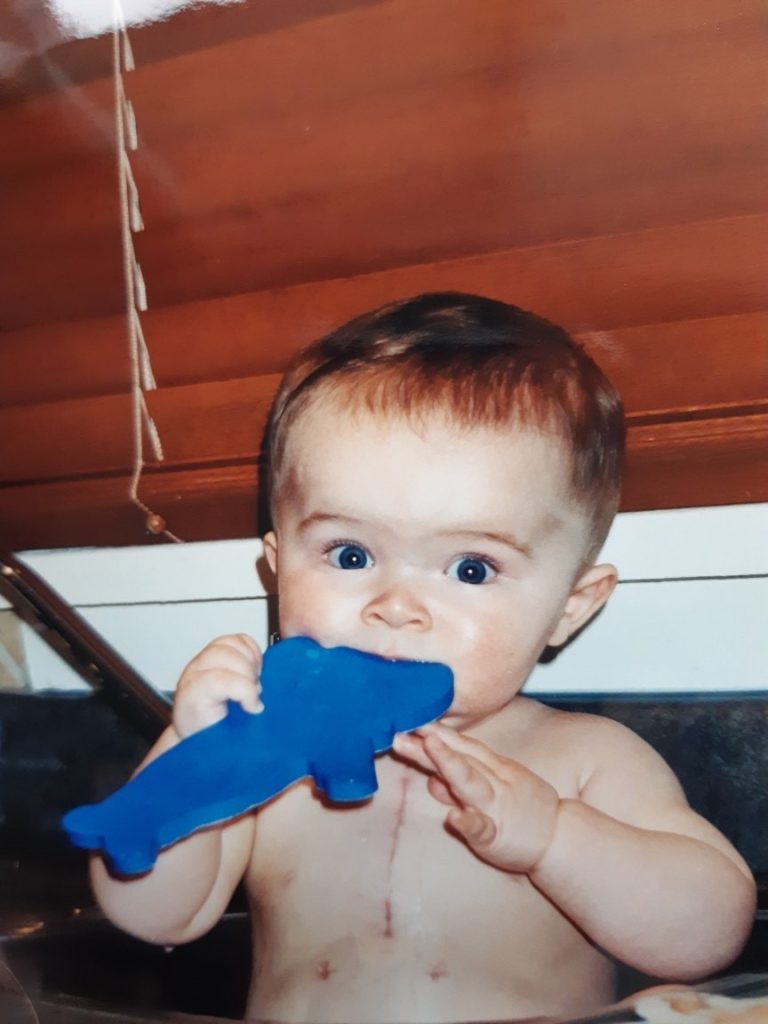
He says his experience with surgeries has been good overall.
“I’ve learned a lot about the medical personnel, learned to appreciate what they do. And honestly, I wouldn’t say that’s the worst part of living with heart disease.”
Cardiac arrest, coma in Mexico
In 2018, Émile suffered a cardiac arrest while on a family vacation in Mexico.
“I was in the ocean playing with a football with some friends, throwing a football,” he recounted. “And I blacked out, essentially. My heart stopped beating. So it was an episode of cardiac arrhythmia where your heart beats super, super fast, and then shuts down immediately.
“What happened then is I was pulled out by my friends and then attended to by a lifeguard who obviously called all the bystanders with a medical background to come and help. Luckily, it was spring break in an all-inclusive resort, so a bunch of people that were actually on the beach vacationing turned out to be medical personnel.”
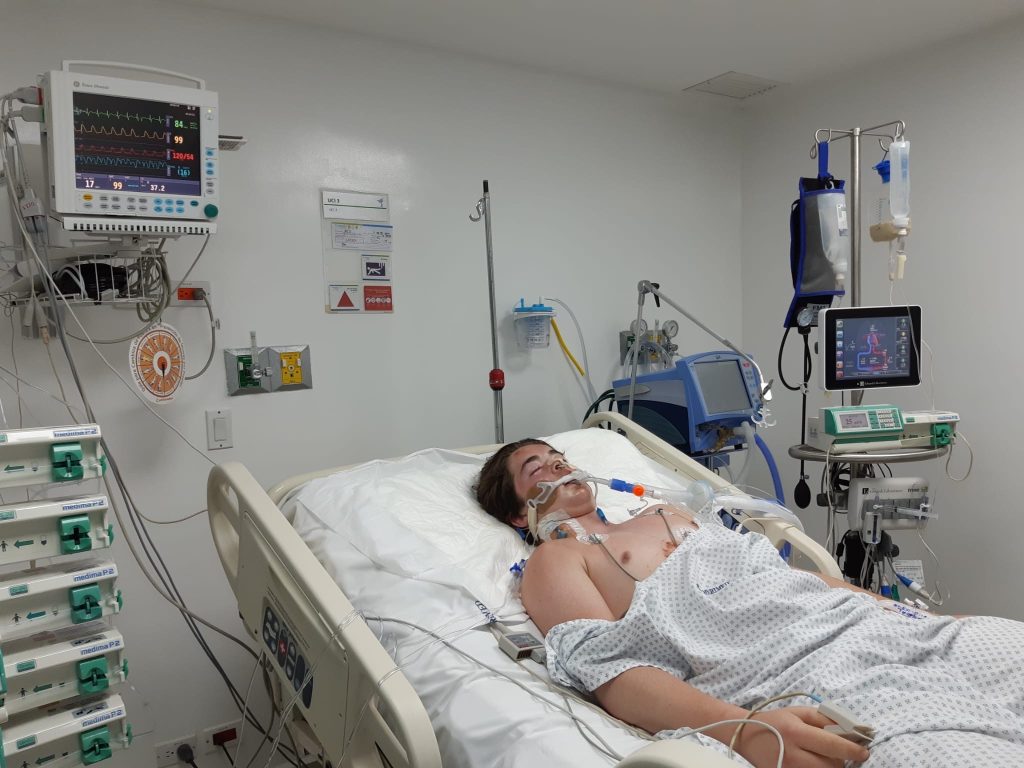
A lifeguard, anesthesiologist, and a dentist did CPR. When the ambulance arrived, Beauchamp still had no pulse. CPR was performed for close to 50 minutes, with the AED delivering nine shocks.
Following the incident, Beauchamp was in a coma for four days.
“I mean, everybody had their role to play in the situation, but the automatic compression machine in the ambulance is what kind of sparked my pulse back,” the Montrealer said. “And I mean, the EMTs were obviously very concerned with the situation, me being unresponsive. But after nine compressions from this kind of board that serves as the automatic compression machine, my pulse came back, and from there, they were like, ‘OK, well, there’s that.’
“As for my brain and my mental state, there were concerns as to how much oxygen I had missed out on or lost. And I got, luckily, there. They had no idea until I woke up out of the coma, which was four days long, actually. And from there on, I came back to normal. There’s no explanation for that. There was no kind of science behind it. It was either he has issues or he comes back as was, and luckily I’m still in one piece.”
“A lot of existential questions came along with multiple reflections that ensue after such an event. Luckily, over time, through a lot of questions and answers, I was able to come to my own conclusion that kind of gives me the fuel, or should I say, the inner peace that I need to continue giving this life my best self.”
His most recent surgery with his pacemaker was at the Institute of Cardiology.
“Obviously, in the waiting room for said surgery, it was all people that were maybe 60, 65 or older. And I kind of felt like an outlier, and I was definitely looked at as an outlier, right? Everybody gave me not dirty looks, but they definitely looked at, ‘What’s this guy doing here?’ And so that’s not something I was used to back in the children’s hospital. But, I learned to adapt within these circumstances. And while now the transition is complete, it’s perfectly fine.”
Beauchamp describes his transition from pediatric care to adult care as happening “pretty early” — when he was 16 years old.
“I was at Sainte-Justine Hospital, which is obviously a well-known children’s hospital. And at 16, they transferred me to the Institute of Cardiology. It was a weird transition in the sense that, well, like I said, I already appreciate the medical personnel, and, you know, whether it’s a children’s hospital or a regular hospital, their intentions are the same, right? And so you learn to appreciate it.
“But I’d say the overall energy within these buildings and these institutions felt a little different, especially when it came to surgery.”
According to the Heart and Stroke report, people with congenital heart disease require care that evolves as their health changes over time – yet many face challenges accessing the support they need.
Heugten explained that “Here at Heart and Stroke, everyone with congenital heart disease should have timely access to equitable care and specialized diagnostics and interventions and lifelong support to optimize their condition. And we believe that more research, knowledge, translation, and data sharing is necessary.”
“Coordination amongst the specialized CHD centers is so important to make sure that the key learnings and evidence are shared, built upon, and used. In addition to that, peer mentorship programs can help to establish a sense of belonging and shared experience and can also benefit those that are navigating transitions. We want transitions to be as seamless as possible as people age. And this does involve support to navigate the healthcare system. And lastly, community supports and resources should be available to support people living with CHD, not just their health needs, but their lives at school work and their personal lives as well,” she added.
“We believe that everyone with congenital heart disease should have access to timely and equitable access to specialized diagnostics and interventions, and that includes a lifelong support to optimally manage their conditions.”
The foundation says there are many gaps in treatments for Canadians living with CHD. A major one is the number of cardiologists, nurses, social workers, and psychologists has not kept pace with the increasing patient population.
“Although there are 32 CHD centres across the country, staffed with multi-disciplinary teams that provide excellent specialized adult and pediatric services, they are not accessible to everyone who should have access,” the foundation wrote.
Heugten says that Heart and Stroke is committed to improving outcomes for people living with congenital heart disease and their families.
“That includes the stories of strength, but also challenges. So, in partnership with organizations across the country, Heart and Stroke is leading the development of a national strategy and action plan. And that is to improve systems of care and equity and access to care across the continuum, but also across the lifespan.”
“Our campaign should really look to help us continue to fund life-saving research, including annual core grants focused on CHD and team grants that we fund in partnership with Brain Canada, the Canadian Institute of Health Research, the Institute of Circulatory and Respiratory Health, and the Institute of Genetics. So, it’s really a partnership effort to raise awareness around congenital heart disease and raise the profile of that across the Canadian healthcare system.”
“This involves 6 priority areas that include specialized care, evidence-based care, optimal transitions, integration of health systems, community integration, and of course, full person care that extends beyond the heart.”
Now 21-years-old, Beauchamp says things have become simpler.
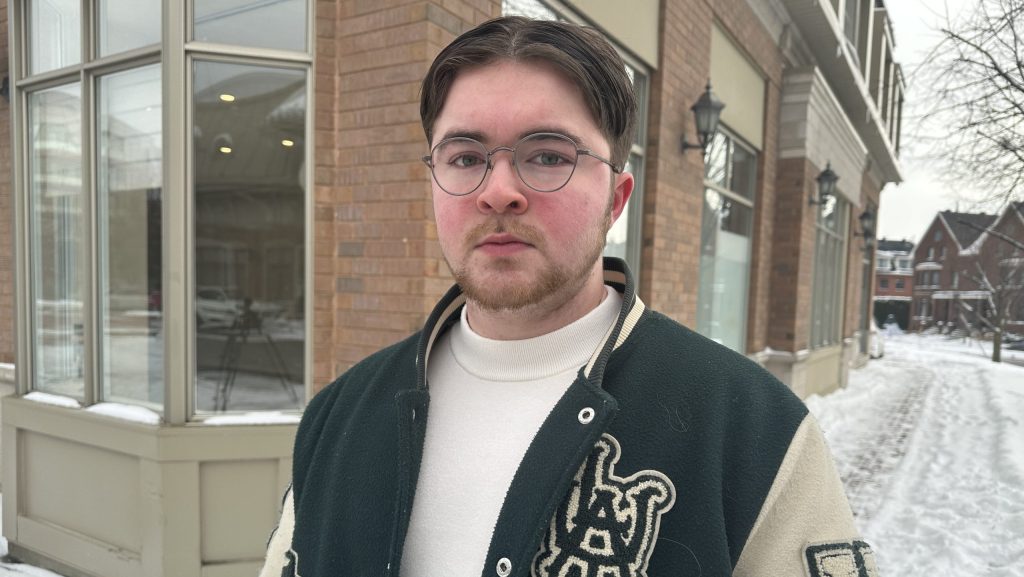
“The heart disease diagnosis itself was harder to swallow when I was a child,” he said. “Over time, I learned to kind of live with it and not just live with it, but accept it as my trait of uniqueness. But the sudden death cardiac arrhythmia episode was the incident that really brought mental health struggles. Where, again, the ‘why me, why did this happen to me? What does this mean? What is my purpose in life? What is the purpose of life as a whole?’
“I just think it takes pain to make progress; that’s a personal mantra of mine. And you know, every loss or every setback can be turned into a lesson. And once that’s the perspective we adopt on life as a whole, every day becomes worth living, and you know, it’s fun to wake up in the morning.”