How Montrealers can protect themselves at home and on the road against heavy rains
Posted July 14, 2025 5:39 pm.
Last Updated July 14, 2025 6:08 pm.
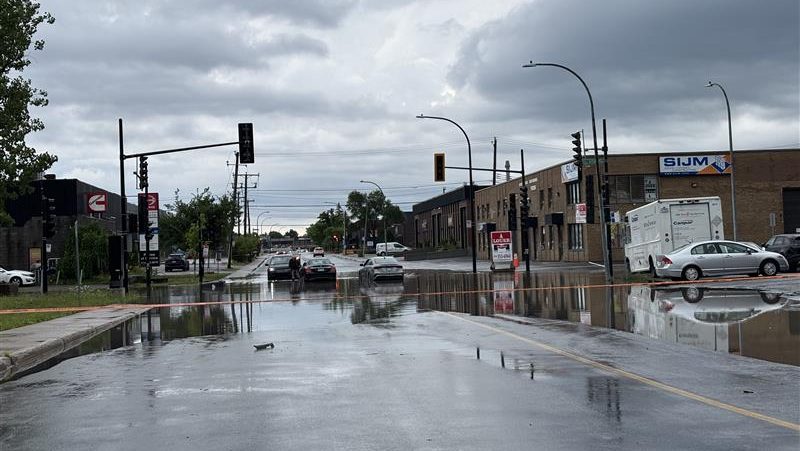
After passing through the Laurentians, Lanaudière, Montérégie, Laval, and Quebec City, Montreal saw as much rain Sunday in a few hours as it does for all of July due to heavy rains that impacted several highways and homes across the city.
According to preliminary data from Environment and Climate Change Canada (ECCC), Montreal was pummeled by 70 to 100 millimeters of rain. At its peak, nearly 100,000 Hydro-Québec customers were without power. As of Monday morning, that number dropped to fewer than 5,000 addresses affected by outages.
Walter Assi, the CEO of Renovco, who focuses on post-disaster restoration, says homeowners should monitor their negative slope – as sloping away from the house of at least five feet will decrease the potential quantity of water by at least 80 to 90 per cent.
“We are going to be getting these types of storms, similar storms so there’s much to do in the home to be prepared for it,” Assi said.
“There are some people, for example, with no backflow valves and people with no sump pumps, people with no gutter extensions. You’re asking for trouble when you do that because you are gonna at one point be the unlucky one,” he explained.
“Water will find its way through.”
RELATED: Saint-Leonard residents deal with intense flooding after Sunday’s storm
The Insurance Bureau of Canada told CityNews that calls continue to come in with reports and clarify that any water damage within a home – like a leaky pipe — is covered within the basic home insurance, but when water comes from outside, it’s an add-on to your coverage.
“It’s a good idea to have that discussion with your broker or with your insurance representative to figure out what are the risks,” said Pierre Babinsky, director of communications and public affairs at the Bureau d’assurance du Canada (BAC).
“What are the available protections, the amount of coverages that are available to you and make sure that you’re well protected,” he explained.
Babinsky noted that despite the high volume of calls, it was nothing compared to the aftermath of Hurricane Debby last year, which has been labelled as the most costly severe weather event in Quebec’s history.
“What’s important is to take pictures, for example, to show how high the water reached within your basement,” Babinsky explained. “(Just) so you can document and show your claims expert, your claims adjuster, what happened, what you did with the items.”
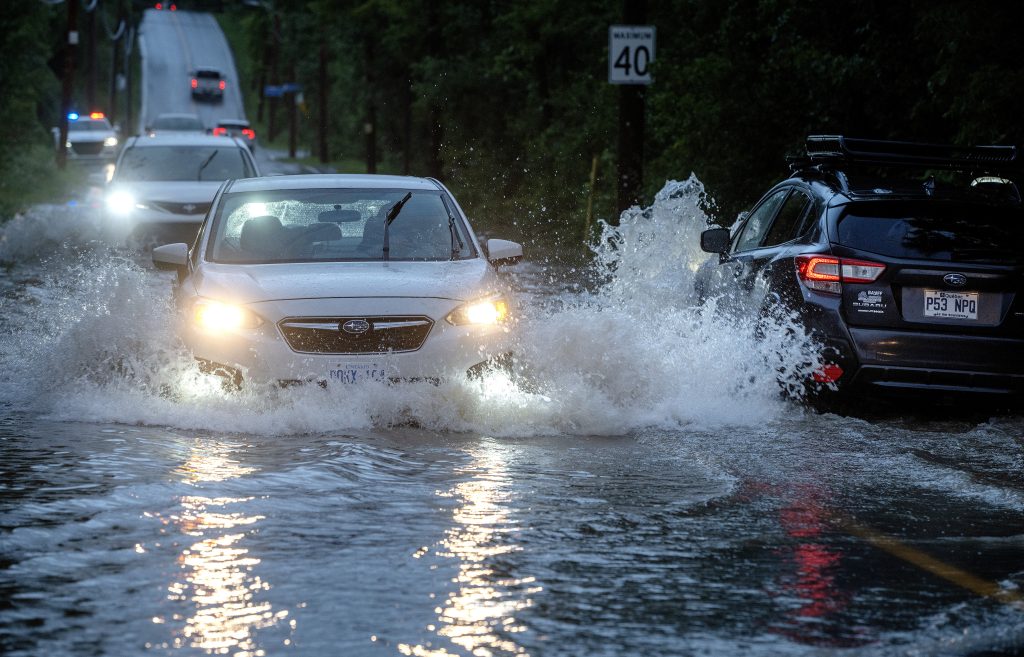
While speaking with CAA-Quebec spokesperson Simon Bourassa, the main danger most motorists need to be mindful about is the traction loss and hydroplaning risk.
“You will know you’re in danger of hydroplaning when you have this unpleasant feeling that the front wheels don’t have any traction when your steering or braking, and you can hear loud noises made by the water in your wheel wells,” he explained.
Many motorists were also impacted by the sudden rainfall Sunday, leaving cars submerged and some drivers needing to be rescued across the city.
Bourassa reminds commuters to also avoid using cruise control when entering heavy rains.
“Make sure to drive safely. Drive slowly,” Bourassa said. “If you’re not sure of what will happen in the forecast in a few hours, just stay at home. Security is always a priority.”
As for homeowners, Assi says the first priority is to look at your gutter extensions and making sure it is faced away from their foundation.
He also reminds homeowners to make sure they have a functioning back flow valve and battery powered sump pumps.
Interestingly, Assi says during the storm they received calls from areas that weren’t impacted during last year’s floods.
“You’re better off not having a gutter at all if that’s what you’re going to do because you’re bringing all the water to one location and overloading that one location,” he explained. “If you do have a foundation crack, if you do have negative slope in your yard, that’s gonna be a problem.”