Montreal’s Pride parade marches on amid controversy and change

Posted August 10, 2025 4:09 pm.
Last Updated August 10, 2025 6:43 pm.
Montreal’s Pride parade marched through downtown Sunday under heightened public attention following weeks of internal controversy and leadership changes within the organization behind the event.
This year’s edition came just days after Fierté Montréal reversed a decision to exclude some groups from marching — a move that sparked backlash and led to the resignation of the board chair.
A celebration of inclusion and visibility
Crowds lined René-Lévesque Blvd. as thousands took part in the annual celebration of the city’s 2SLGBTQIA+ communities.
The parade has long served as a space for advocacy and visibility, but this year brought increased scrutiny.

In the weeks leading up to the event, Fierté Montréal faced criticism over participation guidelines that some said conflicted with the event’s inclusive values. The organization later reversed its position and allowed previously barred groups to join.
Reflecting on the controversy, one attendee said, “I feel like it’s unfortunate. I think Fierté Montréal is such a big organization right now that, of course, it’s going to become corporate. Of course, it’s going to be not only people with all the same political views.
“And it’s unfortunate that some people don’t support, in my opinion, the right side of history.”
They added, “We’ve also went to some events of Wild Pride, which is the Alternative Pride Festival, but we decided to come here as well today to do a bit of both, because I think it’s also important for there to be a mainstream pride and for it to be more of an accessible pride.
“So, votes are still important.”
Official kickoff without media questions
Ahead of the parade, Fierté Montréal held a press conference to officially kick off the event — but no questions from the media were permitted.
Minister of Canadian Identity and Culture Steven Guilbeault spoke, saying, “To build a Canada-strong, we believe that anyone should be able to contribute, to be who they are, to love who they are in security. And this march and this event is a celebration of love. And that’s why I’m here representing the Prime Minister.”

Chair steps up amid challenges
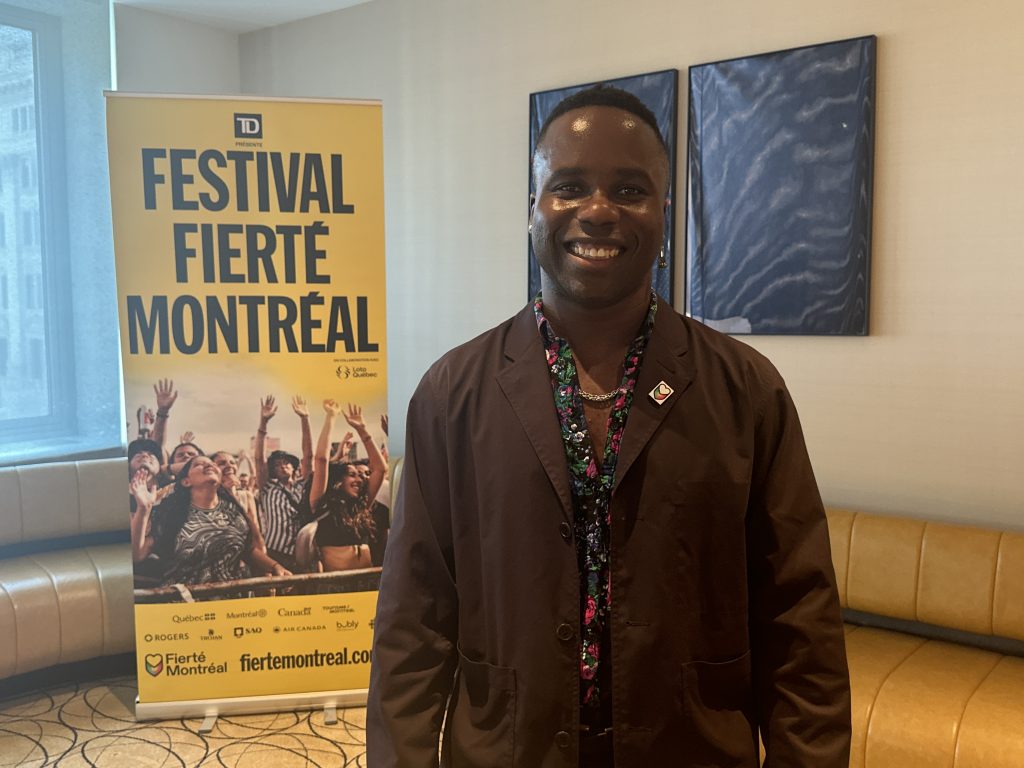
Following the parade, Marlot Marleau, who recently took over as chair of Fierté Montréal’s board, spoke about the leadership changes and the organization’s response to recent criticism.
“We had a person step down for personal reasons, and I decided to step up and to take the lead to ensure that we have this festival going on,” Marleau said. “Because it is so important in an era where we have an increase of step backs for communities here in Montreal but also across the world to make sure that these spaces are still here, it’s relevant, it exists. And so that’s why I decided to step in and to make sure that we get the boat afloat.”
Regarding the decision to exclude certain groups, Marleau explained the organization’s intent to maintain safe spaces. “We had a policy that put a benchmark on what speeches are acceptable to keep our space safe. And so we had complaints about some groups, some people. And so the process went through, and the embossed person rendered a decision to exclude some of the groups based on the action of some individuals.”
He clarified that the decision appeared to exclude a whole community, which was not the organization’s intent: “When the Jewish community received that decision, it appeared a lot like it was excluded based on faith. And we never want to exclude anybody based on their faith. And so we decided to review the decision. So the decision to exclude based on the speech is right. But the decision to send a message to exclude a whole community based on their faith that is wrong. That’s what I wanted to correct.”
Marleau emphasized that Pride is about inclusion and that the controversy was a misunderstanding. “Even if the decision was right to benchmark the speeches, the consequence was disproportionate on a singular group based on a singular group that shares the same faith. And that’s something that I wanted to correct.”
He concluded by promising to open dialogue with the community moving forward: “I want, after the festival, and some rest, to be honest. But after the rest, I want to start an open dialogue with the community groups, with the artists. And these dialogues will take the form of either like meetings, conversations, consultations, and then we’ll lead to a general assembly. We’re going to be able to take a decision that represents the most possible, the communities, the artists, and the two SLGBTA communities.”
Community voices reflect resilience and hope
The 2.2-kilometre march began at René-Lévesque Blvd. and Metcalfe St., in an area once home to early 2SLGBTQIA+ gathering spaces, and ended at Atataken St., in the heart of the Village — the community’s current cultural hub.
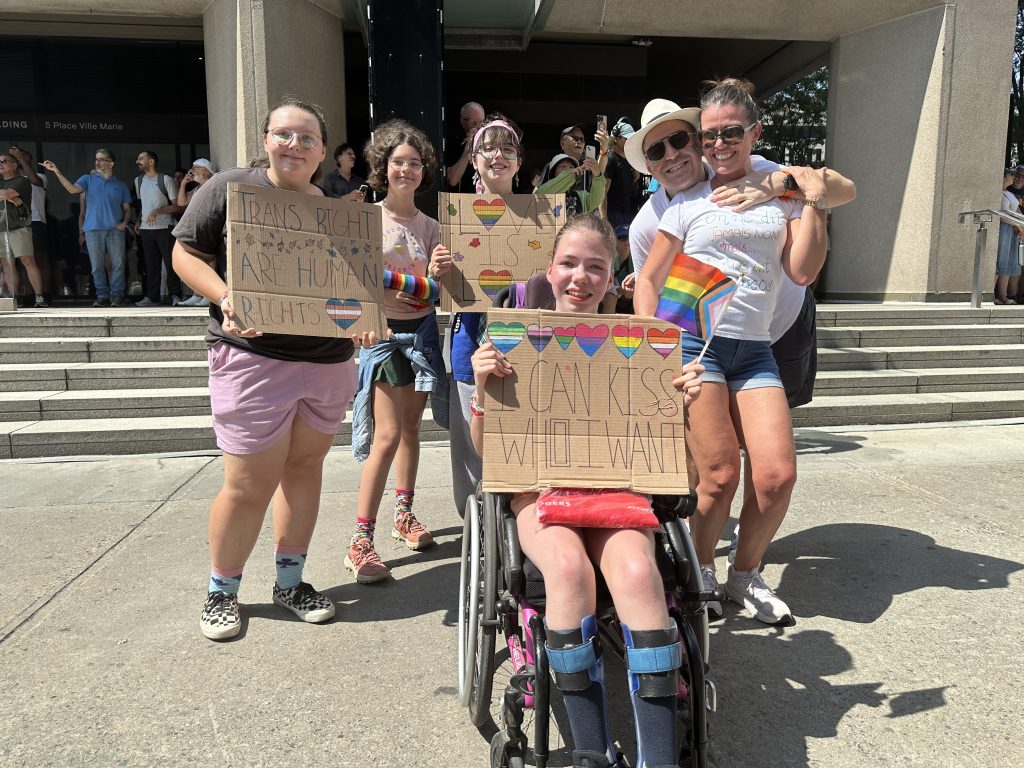
This year’s theme, Blossom Here Now, emphasized the right to grow, fully shine, and love freely — a message that resonated strongly with many in attendance.
“I think it’s important just because in the day and age right now, when a lot of things… I’m from the United States, a lot of things are back rolling a lot in the US. So I’m here to remind, be part of the community and whatnot, and realize that we’re very together, really,” said one attendee.

Another described Pride as “at least one day surrounded by only people that I know are supportive, so we don’t have to think about who’s watching and who’s there — it’s just total freedom to be ourselves.”
Some spoke of what it means to share the day with loved ones. “I’ve been coming to Pride ever since I came out, and it’s nice to be here with my girlfriend too. So, yeah, just being in a supportive environment and showing that it’s okay for anyone to be themselves and to come here,” said one participant.

For others, the event brought reflection on the movement’s history and what’s still at stake. “It means a lot. I’m 59 years old, so I was there at the first Pride in Montréal. And as much as we have a lot, we’ve gained a lot throughout the years for our rights. There’s still so much to go. As we see our neighbors in the U.S. where they’re trying to take out their rights, well, I think this is important to say, ‘hey, we’re still there and you’re not going to take our rights away’.”
The day remained, for many, a joyful affirmation of love and identity. “I think it’s important for everyone to be able to express themselves freely without being judged, and I think that’s what it’s all about,” one person said. “For me, it means being here with my friends and just having a good time.”

A newcomer to the event described feeling embraced by the city after coming out later in life. “Coming to a city that’s so accepting of LGBTQIA+ plus identities has been such a welcoming experience, and to see all of the different groups, it just lets you know that anyone can be a part of the community and there’s a spot for everyone here.”
One of their favourite moments was watching the Irish step dancers. “It’s such a wonderful celebration, and everyone is so friendly, and it’s just, this is like the greatest day,” they said.
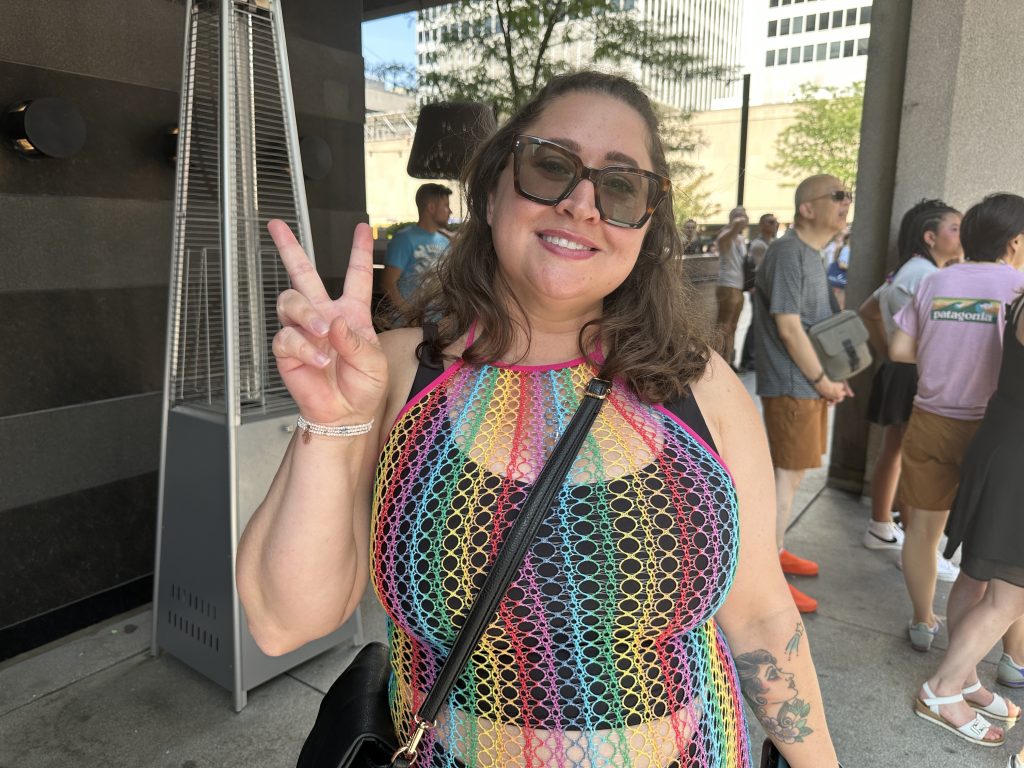
Another participant called Pride “a huge party” — a time “to be happy for love, be happy for everything. Like, they are celebrating everything, so it’s really important in general.”
For some, the message came down to something simple but powerful: “Love is love and I think you can choose where to… yeah, where to love and who. I think we need to be free, and we need to celebrate love. It’s only love. Human beings.”

Celebration continues
Following the march, participants gathered at the Olympic Park’s Esplanade for the Mega T-Dance — an outdoor event featuring music and dancing to cap off the weekend’s celebrations.