Quebec’s fall economic update: How much will Quebecers actually save?
Posted November 18, 2025 10:03 am.
Last Updated November 25, 2025 5:39 pm.
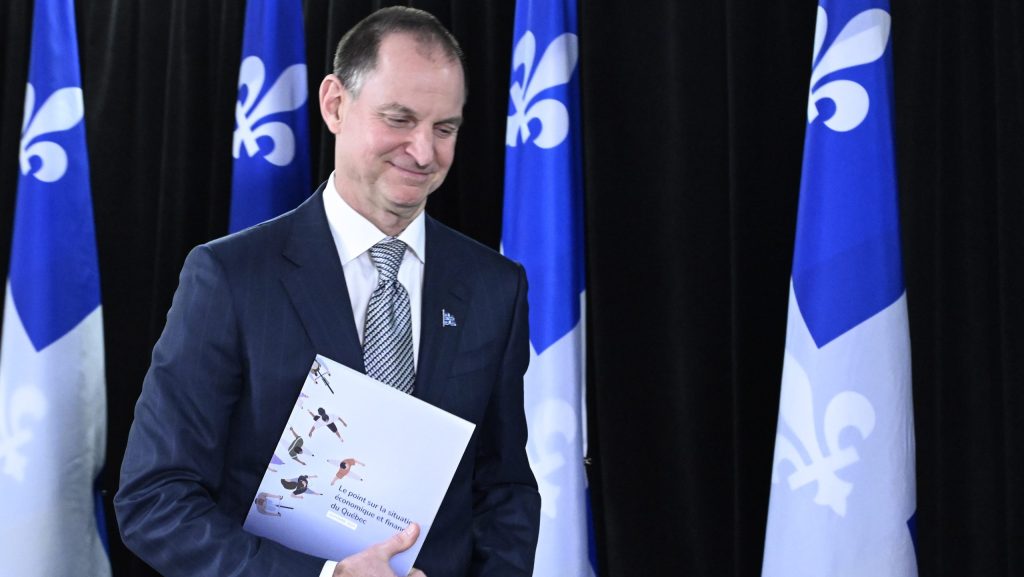
Quebec Finance Minister Eric Girard is giving taxpayers some breathing room. In his fall economic update presented Tuesday, Girard announced a reduction in contribution rates and an indexation of the tax system, part of $8.3 billion in new measures aimed at easing the cost of living and helping businesses navigate a shaky economy.
Girard said the government’s priority is “protecting the purchasing power of Quebecers, protecting our economy, helping businesses, and continuing with sound public finance management.”
How much will Quebecers actually save?
The update includes reduced contribution rates for both the Quebec Pension Plan (QPP), lowered by 0.20 percentage points and the Quebec Parental Insurance Plan (QPIP), where premiums will fall by 13 per cent. The government says these changes represent an average gain of $182 per taxpayer in 2026–2027.
Employees could save up to $137 annually and self-employed workers up to $259 over the next five years, but calculations suggest the average Quebecer will see closer to $80 a year.
“Let’s be clear, $80 a year on average is not going to make a lot of difference for families,” said Renaud Brossard of the MEI think tank.
Other Quebecers felt the same.
“It’s not much. We need to do more, groceries are higher, everything’s going higher. $137 that’s what? $10 a month? Doesn’t pay for transport.,” said Montrealer Richard Guerette.
Another resident, Aradhana, noted that while the effort is appreciated, “it might not be enough.”
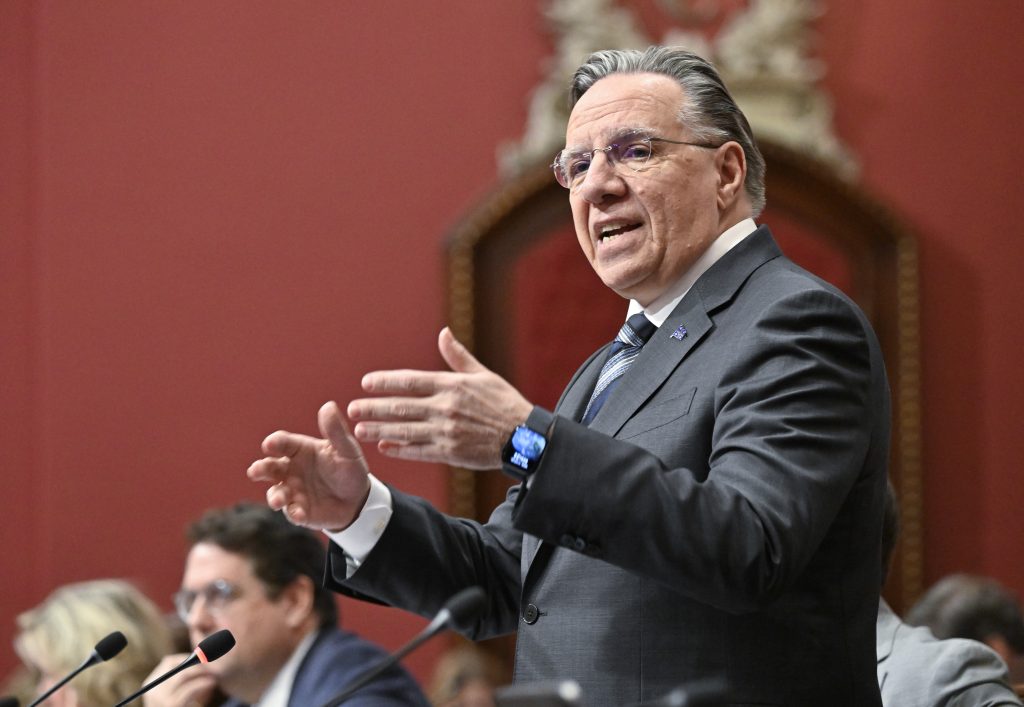
Premier François Legault defended the government’s record following question period at the National Assembly Tuesday, saying Quebecers should “add up what we’ve put back into their pockets since we’ve been here, lower income taxes, lower school taxes, and new tax credits for people 70 and over. We are lowering contributions, bringing the average to over $950 per person for those we are giving back to Quebecers.
Concerns about long-term impacts
While the savings provide short-term relief, some worry about long-term consequences.
“I just benefited from a parental leave that I very much appreciated. If we start clawing back how much we’re contributing, especially how much employers are contributing to these programs, it just means we’re going to have less money when we retire. It’s going to mean we have less money when we go on leave,” said Montrealer, Mathieu Murphy-Perron.
Indexation of benefits and social programs
The update also includes a 2.05% indexation of the tax system and social insurance benefits beginning January 1, 2026. That means, for example, the basic annual benefit for social assistance recipients will rise from $9,408 to $9,600.
Although indexation is usually automatic, Girard’s office pointed out that between 2000 and 2004, Quebec did not always apply it in full.
Business measures
Businesses will also see financial relief. As of January 1, the province is cutting mandatory QPP and QPIP contribution rates, a combined saving of $421 million for roughly 280,000 employers. Quebec will also reverse the federal increase to the capital gains inclusion rate.
More than $400 million over five years is earmarked to support regional economic development. Of that amount, $290 million will go toward the agriculture, forestry, and fishing sectors, including a $255-million temporary payroll tax holiday.
But for some small business owners, the measures don’t go far enough.
“It’s very little savings… We need consumer confidence, and we’re not getting that from Quebec City,” said Graeme Anthony, co-owner of Lopez.
Brossard added that while spending jumped by more than $5 billion, revenues grew only $2.5 billion, leaving many Quebecers wondering whether they’re getting value for their tax dollars.
“If you asked them whether they feel they’re getting $5.6 billion more in services, most would say no,” he said.
““It’s not enough. We’re don’t have the money to invest. Most small businesses, most small restaurants that I’m talking to, they’re two or three days, bad days away from closing.,” said Anthony.
Deficit outlook and long-term plan
The deficit forecast has improved slightly, dropping from $13.6 billion to $12.4 billion, and the government says it still aims to return to a balanced budget by 2029-2030.
“The Minister of Finance, it’s adamant that he’s going to balance the budget by 2029, 2030, but there’s still a $2.5 billion of savings or revenue increases that he’s still not sure how he’s going to get,” cautions Brossard.
An additional payment to the Generations Fund is planned in 2026-2027, tied to an estimated $1.8-billion surplus in the Electrification and Climate Change Fund.
The March budget was presented as the U.S. tariffs war was beginning.
When Carney presented his budget, Girard did not hide his disappointment. In particular, he judged that the new infrastructure investments were insufficient.
In anticipation of the economic update, the Liberal Party asked for “the straight facts” on Quebec’s finances, particularly with regard to the anticipated deficit and the plan to return to a balanced budget.
The group led by Quebec Liberal leader Pablo Rodriguez wants to know more about the plan to optimize spending in government programs, the actual contribution requested from state-owned companies, and the CAQ’s intentions regarding the use of the Green Fund.
For its part, Québec solidaire has formulated “three priority expectations” to “respond to the current economic emergency”.
The party is calling for the introduction of a carbon rebate for low-income households, the creation of an emergency fund to combat hunger among students, and the implementation of emergency housing measures.
–With files from the Canadian Press