1 in 5 tenants had difficulty paying their rent in 2025: survey
Posted January 26, 2026 11:24 am.
Last Updated January 26, 2026 5:37 pm.
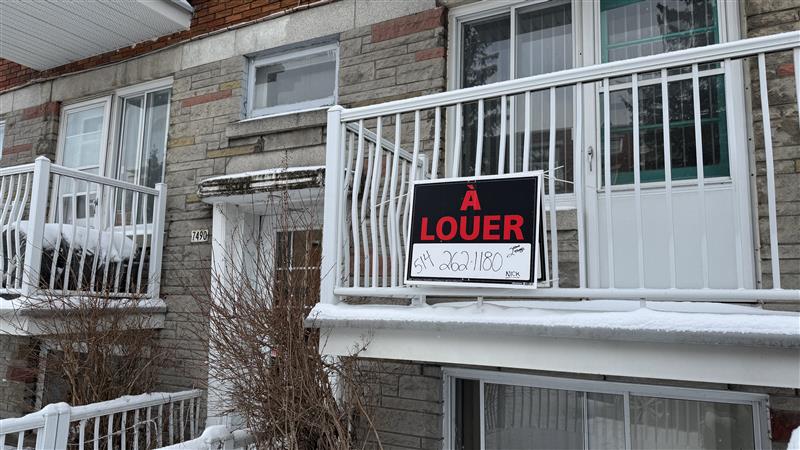
One in five Quebec tenants had difficulty paying their rent over the past year, and that number rises to one in four across Montreal, according to a web survey conducted by Léger.
Across Quebec, this would represent about 720,000 people, according to Vivre en Ville, the organization that commissioned this study.
These are people “who needed to delay their rent payments, borrow money from the bank, or borrow money from friends,” explained Adam Mongrain, the organization’s housing director, at a press conference on Monday morning. “People who have jobs, who are settled in life, are having a lot of trouble making ends meet.”

The finding comes as Quebec’s housing tribunal recommended an average rent increase of 3.1 per cent last week.
According to the survey, more than 10 per cent of tenant respondents said they have experienced this situation on several occasions. “Very few of the households that were scanned in the survey have seen their revenue increase as much as their rent has increased,” said Mongrain.
Vivre en ville has been conducting this annual study on the residential rental market for three years, but this is the first time it has asked respondents about their difficulty in paying rent.
Unsurprisingly, rising rents appear to be the main cause behind this situation. The study found an increase in average rent of approximately $150 per month since 2023, based on the amounts reported by respondents. This represents a jump of $1,800 over one year.
“We know that there have been gains in household income, but very few households can claim to have completely absorbed this increase, this burden, over the past few years,” said Mongrain.
The proportion of people who say they have had difficulty paying their rent at least once in the past year is higher among those aged 35 to 54, at 31 per cent than in the general population.
“This is a very surprising finding,” according to Mongrain, given that this age group is more likely to be employed and possibly to have a “slightly higher-paying” job.
“This is a huge surprise for us and indicates that the traditional victims of the housing crisis that one might imagine, such as seniors or students, are not the most represented in this issue,” Mongrain said.
According to Geoffroy Boucher, economist for Observatoire Québécois des Inégalités, pressure on renters keeps piling up, spilling over into food insecurity, with 1 in 3 tenants in Quebec struggling to put food on the table.
“If a larger part of your budget is dedicated to housing, you will have to cut on other expenses such as food and that’s what we are seeing. That people are reducing food quality or quantity in order to be able to pay their rents,” said Boucher.

Boucher explained that the solution lies in building more affordable housing, something he said remains inaccessible in Quebec.
“What we see is that there’s more available housing, but available housing for higher rents,” said Boucher.
The study also found that only one in five renters knew how much the previous tenant paid in rent, and more than 18 per cent said they would be willing to register their rent in a public registry.
Experts say that this should set off alarm bells for policymakers, and push the province to make it mandatory to record the price of rents.
“We need this information because if you want to keep prices steady between the tenancies, you need to know what the previous price was,” said Mongrain. “Prices are supposed to stay about the same in between tenants in Quebec and those laws were written in the 70s.”
Mongrain added that this only works in practice when the landlord reveals to a new tenant what the previous tenant was paying.
Catherine Lussier, spokesperson for Front d’Action Populaire en Réaménagement Urbain (FRAPRU), adds that a rent registry will highly support tenants and help to avoid an abusive increase in price over time.
The data also revealed that 3 in 10 renters said they would accept any increase in rent given they don’t know their rights or simply because staying feels safer than trying to find somewhere else to live.
According to Lussier, any renter has the right to refuse the price if the increase is obviously abusive or over what is recommended and stay in their apartment.
“The landlord would just have to go to the rental board or the TAL to fix the prices of the rent at that moment,” said Lussier.
The study, which was conducted among more than 5,500 tenants in Quebec from Aug. 27 to Sept. 18. This study was published one week after the Quebec rental board (TAL) announced the percentages applicable to rent increases in 2026.
The base rate is 3.1 per cent for lease renewals beginning between Apr. 2, 2026, and Apr. 1, 2027, for which notice of change was given on or after Jan. 1, 2026.