25% of Quebecers think separation referendum would be successful: poll
Posted February 27, 2026 5:59 am.
Last Updated February 27, 2026 2:55 pm.
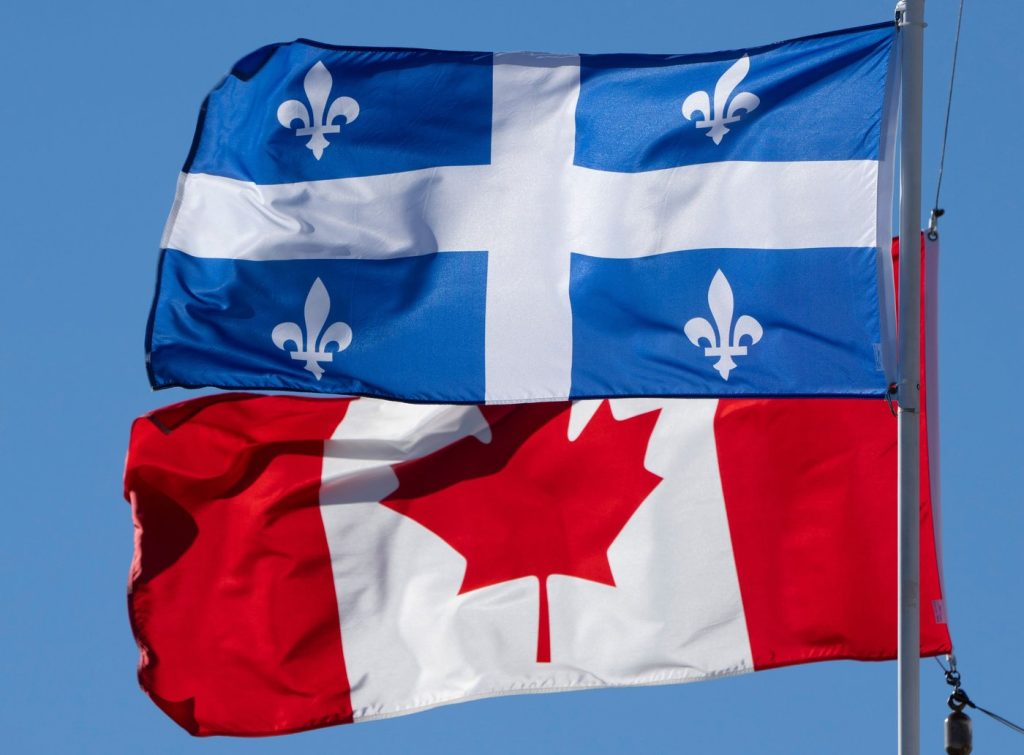
Exactly one-quarter of Quebecers believe a separation referendum would be successful, a new poll for CityNews has found.
The 25 per cent of Quebecers believing sovereignty could become a reality is the second-highest across any Canadian province, behind Alberta at 27 per cent.
The poll for CityNews conducted by Canada Pulse Insights found most other Canadians (87 per cent) – outside of those two provinces – would prefer to remain in Canada.
Support for their province to remain in Canada was the highest in Ontario (95 per cent) and Atlantic Canada (94 per cent).
Overall, only one-in-five Canadians polled believe a hypothetical separation referendum held in either Quebec or Alberta within the next six months would pass.
“Even though there isn’t a referendum either in Alberta or Quebec any time soon, what we wanted to do is to find out what Canadians in each province across the country would feel if they were presented with a referendum-style ballot,” said pollster John Wright.
PQ’s tight rope walk
In Quebec, the leader of the Parti Québécois (PQ), Paul St-Pierre Plamondon, has committed to having a sovereignty referendum by 2030 if elected premier in the upcoming provincial election.
But, earlier this week St-Pierre Plamondon drew criticism for his refusal to commit to a specific timeline for the referendum.
“We need to be flexible and take reasoned decisions when you know the facts,” St-Pierre Plamondon said, given the ongoing U.S.-Canada tensions.
“We’re going to choose the moment within that four years that is the more suited and the more clever.”
“The Parti Québécois is suited right now to win the election, but they’ll take their time and test a number of different scenarios within the province itself, and probably not go to the polls with a referendum until late in their own mandate,” shared Wright. “It’s a different generation now, different values than it did in terms of numbers alone. Nonetheless, this is a campaign that will emerge.”
One Montrealer said a referendum would let people to voice their opinion, “Regardless of a ‘yes’ or a ‘no’ from the people, that is the will of the people. and so democracy would be properly exercised.”
Another said a new referendum was unnecessary, “We’ve decided in the past, and the French language is very well protected. So there’s no reason to separate from Canada.”
Political analysts like McGill University professor Daniel Béland say the PQ leader doesn’t have many options but to stay the course.
“Formally backtracking in terms of having a referendum by 2030 is dangerous in terms of the relationship of Paul St-Pierre Plamondon with his own base,” Béland said.
They say that means the PQ will have to popularize the idea of separation at a time when international politics are making voters hesitant.
“This uncertainty is making at least some people nervous about even the prospect of a referendum,” Béland added.
Albertans not keen on separation
In Alberta, the provincial government recently announced a referendum for Oct. 9 on a number of issues.
The ballot in October will include questions on whether Alberta should take increased control over immigration, restrict provincially funded programs to citizens, permanent residents and those with Alberta‑approved status, impose a 12‑month residency requirement for non‑permanent residents seeking social supports, charge fees for their use of health and education systems, and require proof of citizenship to vote.
“I think what’s happened in the last week is Premier (Danielle) Smith has shown that she’s very open to using referendum on a wide range of topics,” said Wright. “If I had to say, right now, she’s doing a test run of referenda, probably to get the province used to doing one, so there can be one in the near future on the status of Alberta within the province itself.”
Last year, Smith promised a referendum on separation in 2026 if citizens gathered the required number of signatures on a petition.
Canada Pulse Insights surveyed 1,510 Canadian adults powered by the SAGO online panel platform, Feb. 9 – 19, 2026. The results have a comparable margin of error of ± 1.8 percentage points, 19 times out of 20. The results were weighted according to census benchmarks.
With files from The Canadian Press