Montrealers Vote 2025: One-on-one with Ensemble Montréal leader Soraya Martinez Ferrada
Posted October 15, 2025 4:32 pm.
Last Updated October 28, 2025 3:28 pm.
Montrealers head to the polls Nov. 2 to elect their next mayor.
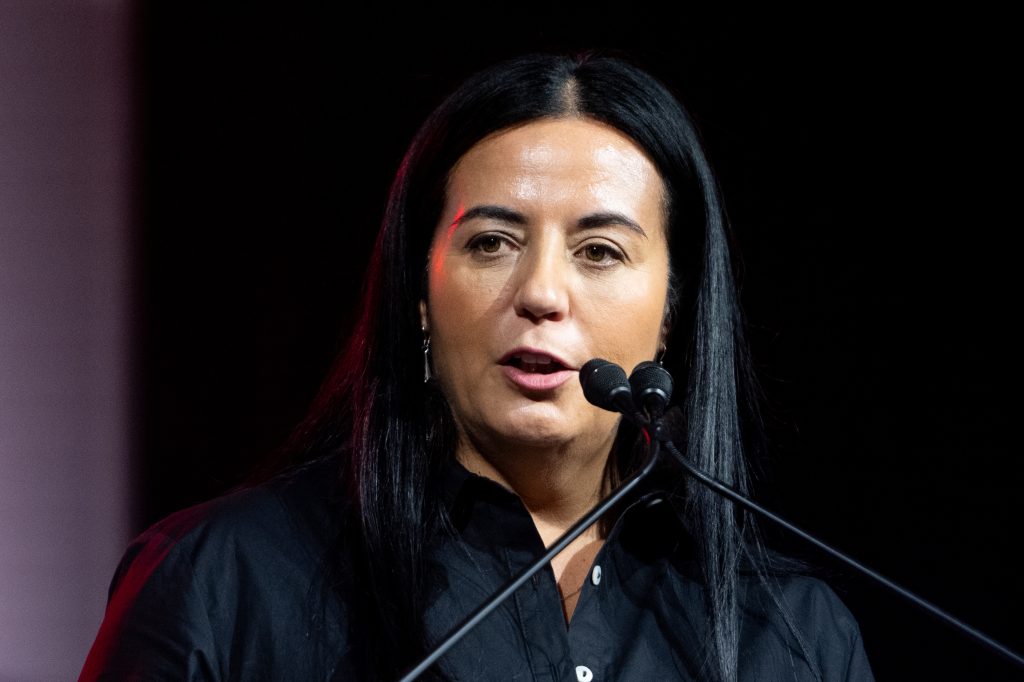
Soraya Martinez Ferrada, leader of Ensemble Montréal and mayoral candidate, joined CityNews for a one-on-one interview about the upcoming election in Montreal. Martinez Ferrada discussed what she sees as the biggest challenges facing Montrealers and why she believes she’s the one best suited to lead the city for the next four years.
Recent Léger polls show Ensemble Montréal as the frontrunner heading into the final stretch of the election campaign. But you’re still faced with a majority of Montrealers who are undecided voters. How are you going to keep the momentum through election day and attract those undecided voters?
SMF: Well, I have a great team on the ground and we do door-to-door calls. I also do door-to-door and I think having, you know, the media talking about our program and who we are, I think helps, of course. But I’m very confident about getting the time to talk to as many Montrealers as I can.
Given your history in federal politics and your involvement with Quebec, how will you build trust with voters who feel those institutions, like the Trudeau government, did not always serve them well?
SMF: I mean, we can have a long conversation about my past in the federal government, but I don’t think it’s your question today. What I feel is that Montreal needs to have confidence again, to be able to have ambition again, and to do that, we need to serve on the basis, essential needs of the city, which is to tackle the housing crisis, tackle homelessness, security, cleanliness of the city, have mobility that is fluid and secure, and of course have a city that works and, you know, is agile. That we can also have the possibility to manoeuvre in terms of finance to tackle the big ambitions that we want to have for the city.
Something you’ve spoken a lot about during the election campaign is the importance of having partnerships with both Ottawa and Quebec. How do you think that kind of partnership could help make the city thrive?
SMF: I think it’s to show that we own our responsibility in order to tackle the issues that we have in the city and show the government of Quebec and the federal that we’re doing our part and showing them that we can do differently, innovate in terms of planning the city better, in terms of our own finances, and of course, in terms of the housing crisis, how can we partner with the non-profit, with the private sector and governments to tackle the issue more quickly and accelerate construction of housing? I think that’s the way that we should be addressing the way that we want to work in partnership with Quebec and the federal government.
One of the big issues for Montrealers when it comes to this election is the economic development of the city. We’ve spoken to a lot of businesses downtown who feel that they’re suffering, that they have a lack of support from the city, and a lot of red tape they often have to cut through. How are you going to help revitalize the downtown core and help support these merchants?
SMF: We need to tackle the issue of the attractiveness of the downtown core and for that, again, security, cleanliness, tackling homelessness and the crisis on the street that we see downtown. But also have a city that will tackle the bureaucracy, to your point around how we make it easy. I’ll give you an example. If I’m mayor of Montreal, I’m mayor of the downtown core. I said that I wanted to give free permits for terraces and make sure that it would be easy for terraces to be built downtown for the restaurateur, the food sector, to thrive again in downtown. We can also partner with the commercial association downtown to make the city and the downtown core more attractive again.
On the topic of cleanliness, it’s something you’ve spoken a lot about during your campaign. There are a lot of people who fear we might be right behind Toronto or Vancouver when it comes to cleanliness in the city. How do you plan to tackle that if you’re elected mayor?
SMF: We need to, again, partner with local associations, commercial associations. We put some money down to work on getting all the areas that are empty, stores that are empty, to make them look good. So it’s a beautiful street and people feel that they can go there and it’s clean. Tackling the issue of cleanliness goes through having a specialized brigade to work on cleanliness with associations, and I think we can do better in terms of picking up the garbage, just simply.
Another big issue, which has been your top priority, is the homelessness crisis that we’re seeing in the city. How are you going to address that?
SMF: I’ve made my first priority the homelessness issue. I think we need to tackle a few things. First of all, making sure that nobody else gets on the streets, preventing people from losing their homes, losing the unit of rent or units. We need to make sure that we’re working with the non-profit to do that in terms of prevention. We need to make sure that we address the issue of the overflow. We need to make sure that we’re supporting the needs everywhere, but in smaller spaces, and tackling encampments. If we dismantle them, they go somewhere else. So we need time to tackle the encampments, have a protocol. In the meantime, we construct transitional homes, we tackle the cleanliness of the encampments and the cohabitation with neighbourhoods that are right now struggling with the fact that it’s very difficult to cohabitate with a social crisis that we have on our hands.
Another issue that people want tackled is the housing crisis in Montreal. There’s a lack of space, a lack of affordable housing and, as a result, a lot of people are looking to leave the city because they simply can’t stay here. How do you plan to tackle that?
SMF: I think with homelessness this is the other most important crisis that we have. We lost over 300,000 people from the city in the past eight years. We might lose another 200,000 people. So we need to stop the exodus of our families and our young kids, our grandparents and parents. Tackling construction will be a new way to do it. We need to finance the way that we construct in Montreal, to lower the cost of construction, accelerate the permits, partner with the private sector and then non-profit in order to build social and affordable housing that we need. But also help citizens, like we announced today, to be able to construct units on their own property, to be able to address the fact that their kids need to be in the space, but not in your space, right? And grandparents, so the intergenerational aspect of keeping families together. So we announced identification through the units of family homes that we can do in Montreal. I think we need to think differently about how we are going to construct and incentivize more and more construction in order to stop construction from going elsewhere, because right now we have a lack of construction in Montreal, and that is very concerning.
Mobility and our transit system are also big issues in the city, and candidates have spoken of what they see as viable solutions to fix these problems. If elected, how are you going to fix our transit system?
SMF: We have to address it in a way of mobility, looking at fluidity in a way that is secure. But what does that mean? That means moving on a bike, moving in a car, moving as a pedestrian, moving in traffic, moving in transportation. All of that is the mobility of our city. So we need to have better planning on construction sites, making sure that when you address planning of a construction, you understand the impact on the fluidity that it has on your city. We have to better plan the sequence of our construction sites. We have to make sure that we are addressing the fact that east and west, especially outside the downtown core of Montreal, we need more public transportation and more efficiency, and we need to work with governments like Quebec and Ottawa to make that happen. We need to make sure that we’re cohabitating and sharing the space between bicycle paths and merchants and citizens to make sure that everybody’s being considered when we are addressing the space that we share all together. So it has to be a way of looking at the whole perspective of mobility in a very large way, not only polarizing the conversation around cars and bikes.
What do you think makes you the right person to lead Montreal for the next four years?
SMF: I think I have a team. I brought Montrealers who, for the first time, decided to leave behind their own jobs, like Claude Pinard from Centraide, Lorraine Pintal, Geneviève Desautels, Thierry Daraize. I mean, we have a lot of people who decided for the first time to serve. So I don’t come as a mayor, I come as a mayor with a team ready to serve Montrealers and do better for the city, because Montreal deserves better.